
Defendants and Cosigners, Protect Your Credit: Do Bail Bonds Check Credit?

No, in most cases getting a bail bond does not appear on your credit report or move your credit score. The bond itself is a contract between you, a licensed agent, and the court, not a loan reported to credit bureaus. Credit risk enters only through side doors: financing the premium, paying with a credit card you can’t pay off, or missing payments that end up in collections. Cosigners and anyone putting up property as collateral carry the real exposure.
TL;DR:
- Bail bonds typically do not appear on credit reports or affect scores unless you finance the premium with credit products or collateral seizure occurs.
- Most agents verify identity and risk factors without running a credit check for misdemeanor bonds, but higher-value or collateralized bonds may warrant a soft credit inquiry.
- Financing options like payment plans, credit cards, or personal loans carry actual credit risk, especially if payments are missed or turn into collections.
- Collateral or cosigning amplifies financial exposure, with missed payments possibly resulting in liens, judgments, or collections impacting credit reports.
- To protect credit, ask about credit checks upfront, pay in full if possible, keep detailed records, and understand the terms of any financing arrangements before signing.
Table of Contents
- Do Bail Bonds Check Credit? How the Reporting System Actually Works
- Do Bondsmen Check Credit? When and How It Happens
- How Financing Your Bond Premium Can Actually Hurt Your Credit
- Cosigners and Collateral: Who Else Is on the Hook
- Practical Steps to Protect Your Credit While Arranging Bail
- How Armstrong Bail Bonds Approaches Credit Risk
- Why the Credit Question Misses the Real Risk
- Need Bail Now? Here’s How Armstrong Bail Bonds Handles It
- Sources
- FAQ
Do Bail Bonds Check Credit? How the Reporting System Actually Works
A bail bond is a surety bond, not a consumer loan. The agent guarantees the court that you’ll appear, and you pay a nonrefundable premium (typically 10% of the total bail amount) for that guarantee. Courts and jails don’t transmit arrest, custody, or bail information to Equifax, Experian, or TransUnion, and a bail agency posting your bond has no standard channel to report it either, according to industry practitioners who work directly with defendants and their families.
That’s different from a personal loan or credit card, where a lender reports your payment history monthly. The Consumer Financial Protection Bureau’s explanation of credit scores makes clear that scores are built from reported debt obligations, on-time payments, and credit utilization, not from arrest records or court appearances.
There are exceptions worth knowing:
- If you put up real property as collateral and later default, the resulting lien or foreclosure action can land on your credit report.
- If an agent sues you for an unpaid balance and wins a civil judgment, that judgment can become part of your public record and affect creditworthiness even if it doesn’t post directly to your credit file the way a missed credit card payment does.
Do Bondsmen Check Credit? When and How It Happens
Most agents don’t pull a formal credit report for a routine misdemeanor bond. Instead, they verify who you are and whether you’re a flight risk. Industry practice generally splits along these lines:
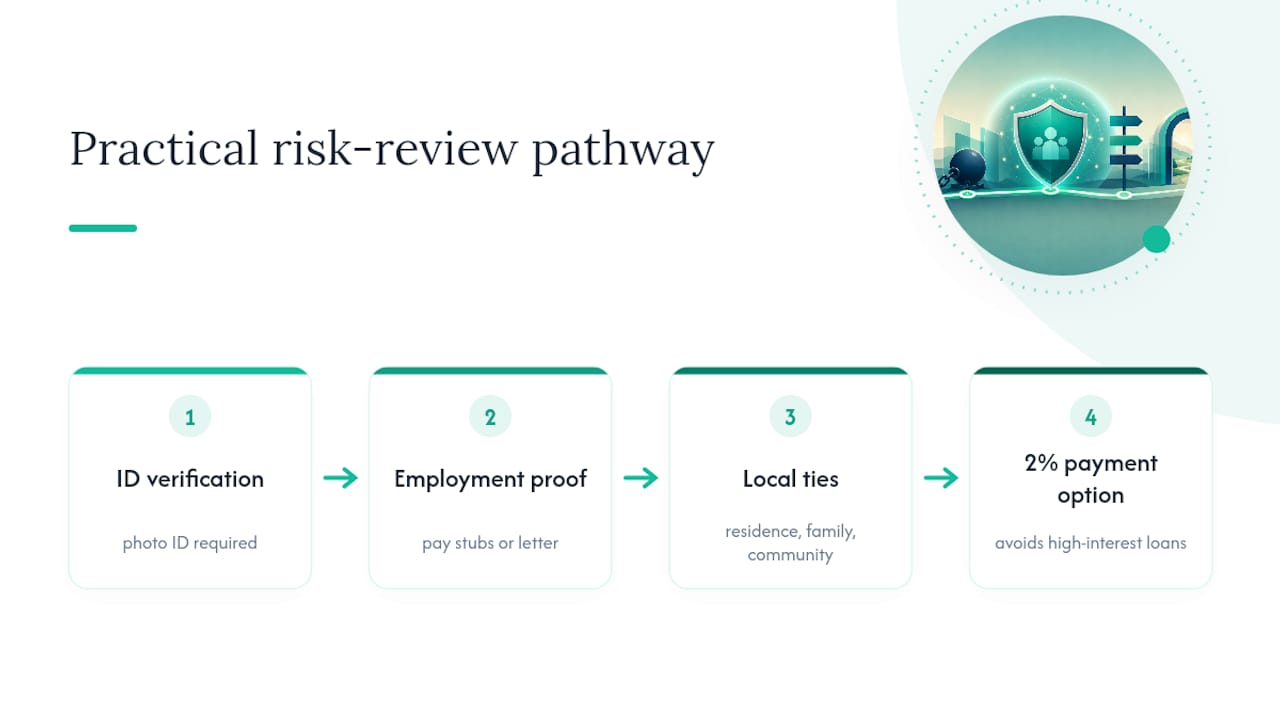
- Low-value or misdemeanor bonds. Agents typically ask for ID, proof of employment, and evidence of local ties (a lease, utility bill, or family in the area) rather than running a credit check at all.
- High-value or commercial bonds. For bonds in the tens of thousands of dollars or higher, some agencies do run a credit check to gauge whether a payment plan is realistic, especially when the defendant wants to finance the premium over time.
- Cosigned bonds. If a friend or family member is cosigning and financing part of the premium, the agent may check the cosigner’s credit rather than the defendant’s.
When a check does happen, it’s frequently a soft inquiry, one that doesn’t affect your score, because agents mainly want a general risk picture rather than a full underwriting decision. Ask directly: “Will you be running a credit check, and is it a soft or hard pull?” A straight answer to that one question tells you almost everything you need to know before you sign anything.
How Financing Your Bond Premium Can Actually Hurt Your Credit
The bond itself is neutral. What you do to pay for it isn’t. Three financing paths carry real credit risk:
- Premium financing or promissory notes. Some states allow bail agencies to finance the premium through a structured payment plan. Connecticut’s statutes on surety bail bond premiums set minimum down payments and require agents to pursue collection action if a payment plan falls more than 60 days past due, which can lead to a civil judgment.
- Credit cards. Paying a premium with a card spikes your utilization ratio, one of the bigger levers in your score, and interest compounds fast if you carry a balance.
- Personal loans. These behave like any installment loan: missed payments get reported, and a default can sit on your credit file for years.
Statistic Callout: Under Connecticut’s premium-financing framework, an unpaid balance that passes the 60-day mark can move directly into civil collection proceedings, turning a bail arrangement into a credit-damaging legal matter almost overnight.
Courts have also drawn a legal line worth knowing. A New Jersey appellate opinion examined whether a promissory note tied to a bail transaction counted as an extension of credit under the Truth in Lending Act, and found that it did not in that case. That means the federal consumer protections you’d expect from a financed purchase may not automatically apply to every bail-related payment plan. Read the fine print before you sign one.
Cosigners and Collateral: Who Else Is on the Hook
Cosigning a bail bond means you’re legally responsible for the full amount if the defendant skips court or the agent has to pursue forfeiture. That responsibility doesn’t sit quietly. If the agent can’t collect from the defendant, they come after the cosigner, and unpaid balances can end up as collections accounts or civil judgments on the cosigner’s credit file.
Putting up a house or car as collateral raises the stakes further:
- Collateral seizure or a forced sale to cover a forfeited bond can trigger a lien.
- A resulting loan default (if you financed the collateral itself) can show up on your credit report the same way any secured-loan default would.
- Agents typically also check employment, residency stability, and whether the defendant has a history of missed court dates, factors that shape risk far more than a credit score does.
Pro Tip: Before you cosign anything or agree to put up property, ask the agent for their written policy on collateral return once the case closes. A verbal promise isn’t worth much if something goes wrong later.
Practical Steps to Protect Your Credit While Arranging Bail
You can walk into this process and keep your credit intact if you handle a few things upfront.
- Ask whether a credit check will happen and whether it’s soft or hard before you sign anything.
- Pay the premium in full if you can. It removes financing risk entirely.
- If you finance, get the payment schedule in writing and set calendar reminders. Missed payments are what cause damage, not the bond itself.
- If you use a credit card to pay bail, plan how you’ll pay it down quickly to avoid a utilization spike.
- Keep every receipt and written agreement, and dispute any collections entry you believe was reported in error.
Pro Tip: A written payment plan with clear due dates is the single best protection you have. Verbal agreements are the most common source of “I didn’t know that was due” disputes that end up hurting credit.
How Armstrong Bail Bonds Approaches Credit Risk
A bail bonds agency with long regional experience may adopt a philosophy that the fastest, least stressful bail process is also the one least likely to put a client’s credit at risk. Flexible payment options, including 2% bail bond programs, reduce the pressure to reach for a high-interest credit card or personal loan just to cover a premium. Rather than defaulting to a formal credit check, many agents typically ask for identification, proof of employment, and local ties, the same practical verification used across the industry for standard cases. That approach keeps the process moving toward one goal: getting families reunited quickly, without adding a second financial problem on top of the first.
Why the Credit Question Misses the Real Risk
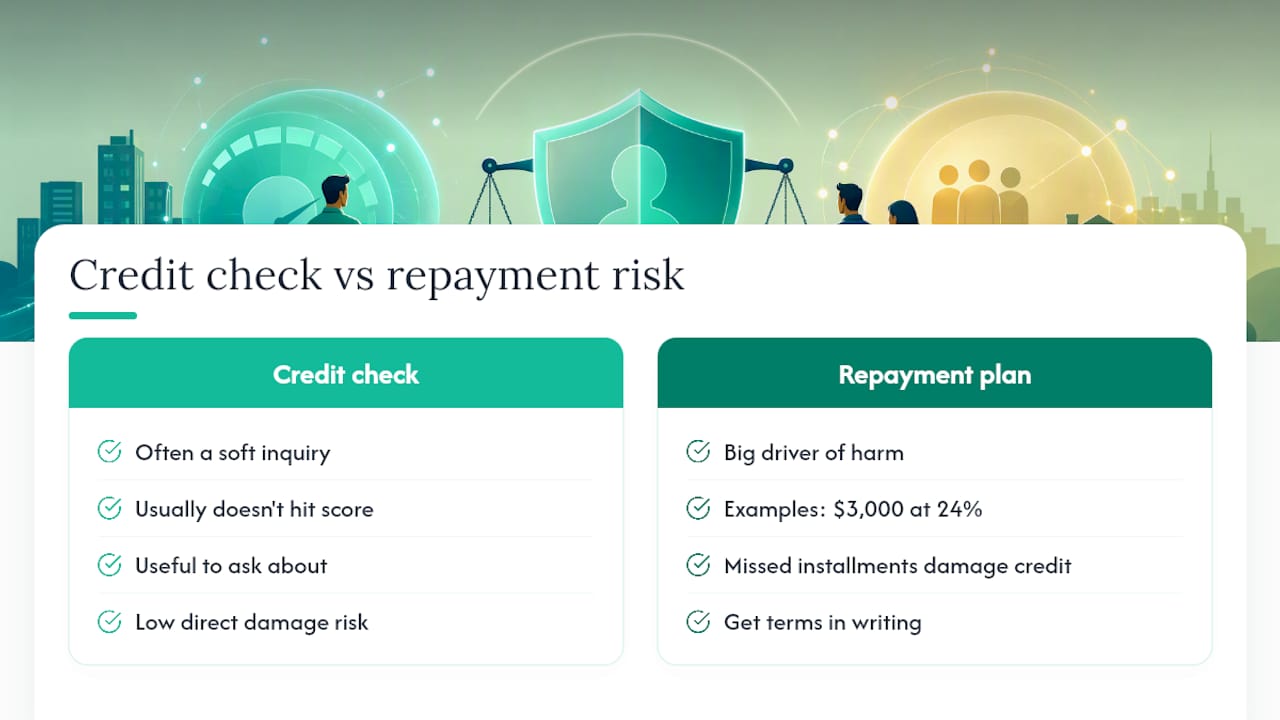
The question “do bail bonds check credit” is the wrong worry for most people. The right question is “how am I going to pay for this, and what happens if I’m late?” Nearly every credit horror story tied to bail traces back to financing choices, not the bond itself: a maxed-out credit card, a missed installment on a payment plan, a cosigner who didn’t understand what they signed up for.
Conventional advice tends to stop at “ask if they’ll run your credit,” which is useful but incomplete. It ignores the fact that a soft inquiry that doesn’t touch your score is nearly irrelevant next to a $3,000 balance sitting on a credit card at 24% interest. If you take one thing from this, prioritize the repayment plan over the credit check. Get it in writing, know the due dates, and know what happens if you’re late before you’re in that position. That single habit prevents more credit damage than avoiding a soft pull ever will. Cosigners especially should read every line of what they’re agreeing to since they carry the same legal exposure as the defendant without always getting the same information upfront.
— Jake
Need Bail Now? Here’s How Armstrong Bail Bonds Handles It
Armstrong Bail Bonds gives you a faster, lower-friction path than piecing together a payment plan on your own: bilingual agents answer around the clock, and the online application lets you start the process from a phone in the waiting room instead of waiting for a callback.

If you’re worried about collateral, ask about no-collateral bail bonds before you agree to put up a house or car. If cost is the concern, 1% bail bond programs and other affordable bail bond options may lower what you need to finance in the first place. Whatever agency you use, ask the questions covered in this article, soft or hard credit pull, payment plan terms, collateral return policy, before you sign. Contact a reputable bail bonds agency to get answers specific to your case and move toward release without guessing at the fine print.
Sources
This article draws on the CFPB’s credit score guidance, Connecticut’s premium-financing statutes, Florida’s cash-advance regulations for bail agents, and a New Jersey appellate opinion on TILA and bail promissory notes.
- What is a credit score? — Consumer Financial Protection Bureau
- Connecticut statutes on surety bail bond premiums and premium financing
- Appellate court opinion considering TILA’s application to bail-related promissory notes
FAQ
Do I Have to Pay Back a Bail Bondsman?
The premium you pay a bail agent is nonrefundable and isn’t something you “pay back” like a loan, but if you financed it through a payment plan, you owe the remaining balance regardless of the case outcome. Missing those payments can lead to civil collection action, as outlined under Connecticut’s premium-financing rules.
How Much Is a $1,000 Bail Bond?
At a standard 10% premium, a bail amount typically costs 10% of that amount, though the exact rate depends on the state and the agency. Armstrong Bail Bonds lists its bail bond premium structure directly, and lower-premium programs may apply depending on eligibility.
What Happens if I Cannot Afford Bail?
You generally have three paths: a payment plan with a bail agent, using collateral to secure a bond, or having a cosigner help cover the cost. Armstrong Bail Bonds outlines options for what happens if you can’t afford to pay your bond, including flexible plans designed to avoid pushing you toward high-interest credit.
Can You Borrow Money From a Bail Bondsman?
Some agencies offer premium financing, which functions similarly to a short-term loan for the bond premium, but it isn’t cash you receive directly. Terms vary by state, and as courts have noted, these arrangements aren’t automatically treated as TILA-covered credit, so it’s worth asking exactly what consumer protections apply before signing.
Will a Bail Bond Company Run a Hard Credit Check?
Usually not for standard misdemeanor bonds. Higher-value or commercial bonds are more likely to involve a check, and it’s often a soft inquiry that doesn’t affect your score. Always ask the agent directly which type of check they plan to run before you agree to anything.