
$500–$1,000 Bail? Vandalism Bail in California: Get Out Fast
Bail for vandalism in California typically runs in the several hundreds for misdemeanor damage under four hundred dollars, and can increase to higher amounts once damage reaches or exceeds that threshold and the charge becomes a wobbler. The fastest way out is a licensed bail bond or full cash payment; some counties allow OR (own recognizance) or cite release for low-level first offenses. Confirm the exact county and booking number first, then call a bondsman or attorney immediately.
TL;DR:
- Bail amounts for vandalism vary by damage level, with under $400 typically costing around $500, and $400 or more often starting at $750, depending on the county.
- County bail schedules are used to set initial bail figures, but judges can increase bail for repeat offenders, hate crimes, or cases involving gang or domestic issues.
- The damage amount, especially whether it exceeds $400, significantly influences whether the charge is misdemeanor or a wobbler with potential felony charges.
- Bail can be posted via cash, a bondsman, or through release options like own recognizance, depending on the case and county policies.
- Defense strategies often focus on disputing damage estimates under $400 to avoid higher bail and felony sentencing.
Table of Contents
- What Does Penal Code §594 Actually Require for a Vandalism Charge?
- How Does the County Actually Set Your Bail Amount?
- What Are Typical Bail Amounts for Vandalism in California?
- What Are Your Options to Post Bail Right Now?
- Can You Get Bail Lowered or the Charges Reduced?
- What Penalties Are You Actually Facing?
- How Does a Bail Agent Actually Get Someone Released?
- What Should Families Prioritize in the First 24 Hours?
- How Armstrong Bail Bonds Gets You Through This Faster
- Sources
- FAQ
What Does Penal Code §594 Actually Require for a Vandalism Charge?
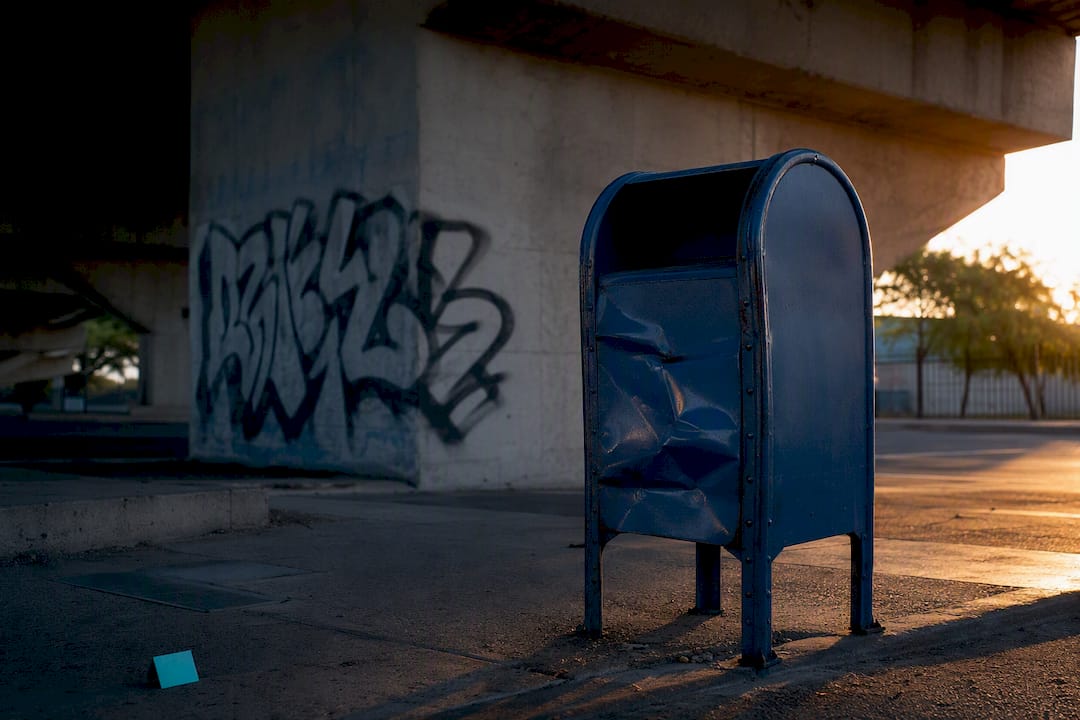
California Penal Code §594 defines vandalism as maliciously damaging, defacing with graffiti, or destroying property that isn’t entirely your own. Prosecutors need to prove three things: the act was malicious (not accidental), it damaged or defaced property, and the property belonged at least partly to someone else. A dented mailbox and a spray-painted overpass both fall under the same statute; what changes is the dollar amount of damage.
That number is everything in a vandalism case. Damage under $400 is a straight misdemeanor. Damage of $400 or more turns the charge into a wobbler, meaning a prosecutor can file it as either a misdemeanor or a felony depending on the facts and the defendant’s history, according to Shouse Law Group’s breakdown of PC 594.
A few other details shift the stakes considerably:
- Damage of $10,000 or more can push fines up to $50,000, on top of possible prison time.
- Prior vandalism convictions raise both the fine ceiling and the odds a prosecutor files felony charges even on borderline damage amounts.
- Courts frequently order graffiti cleanup or community service, sometimes in place of or alongside jail time, particularly for first offenses.
- The property doesn’t have to be public. A landlord’s rental unit, a neighbor’s fence, or a school wall all qualify.
Understanding where your case falls on this $400 line matters more than almost anything else in the process, because it drives everything downstream, including bail.
How Does the County Actually Set Your Bail Amount?
Bail doesn’t start with a judge weighing your life story. It starts with a printed schedule. Every county in California maintains its own bail schedule, a document listing presumptive bail amounts for specific charges. Booking clerks pull the number straight from that list within hours of your arrest, often before anyone has reviewed the actual facts of your case.
That schedule isn’t absolute. Under Penal Code §1269c, a magistrate or judge can deviate from the schedule if local law enforcement files a declaration arguing for higher bail, usually citing danger to the community or flight risk. This happens more often than people expect in vandalism cases tied to repeat graffiti, hate-motivated property crimes, or damage to religious or civic buildings.
Judges weighing bail on a vandalism arrest typically look at:
- Criminal history, especially prior vandalism or property-crime convictions
- Ties to the community: job, family, fixed address
- Flight risk, including out-of-state residency or a history of missed court dates
- The dollar value and nature of the damage (random tagging reads differently than targeted property destruction)
- Whether the case involves a gang allegation or a domestic dispute, both of which tend to raise bail
Pro Tip: If you’re calling on someone’s behalf, ask the jail’s booking desk whether bail was set at the schedule amount or raised by a judge’s order. That single question tells you whether you’re dealing with a routine case or one that needs an attorney involved before you post anything.
Two people arrested on nearly identical vandalism facts can walk away with very different bail figures, according to E&G Attorneys’ analysis of California bail practices, simply because one had a prior conviction or was flagged as a flight risk and the other wasn’t.
What Are Typical Bail Amounts for Vandalism in California?
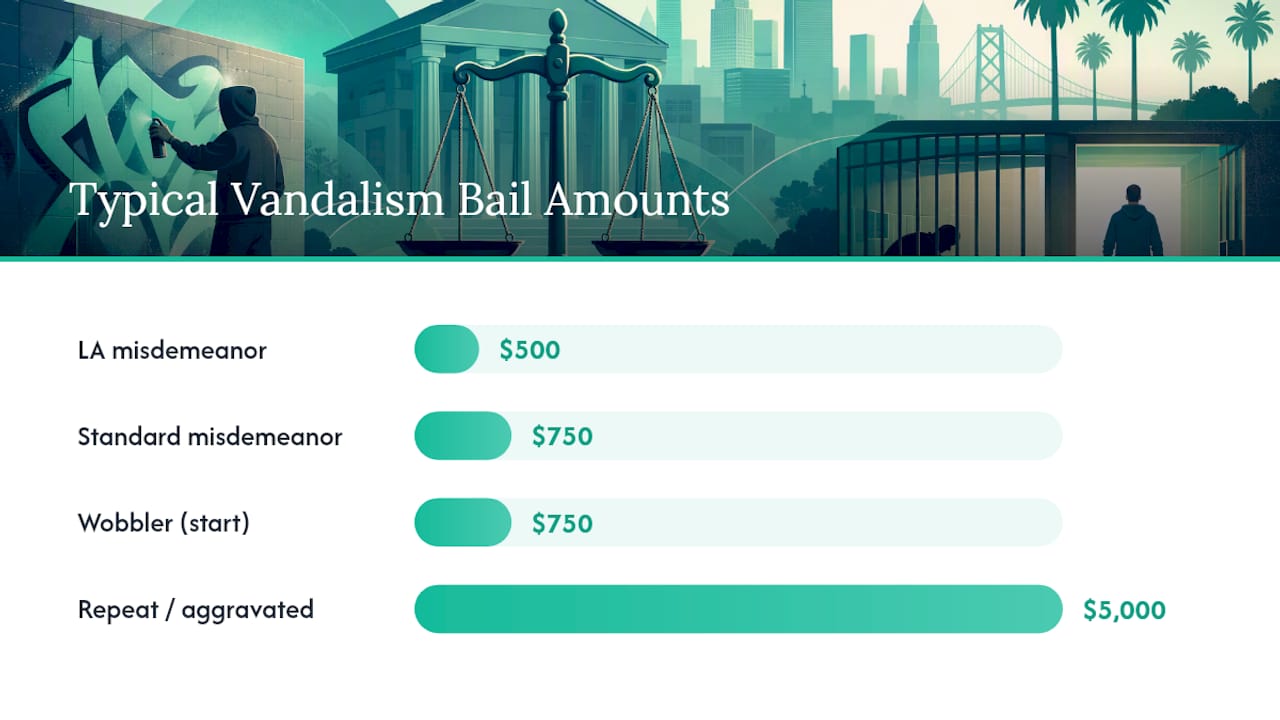
When a county’s bail schedule doesn’t list vandalism specifically, most fall back on standard defaults. Los Angeles County’s misdemeanor bail schedule sets unlisted misdemeanors at $500 and unlisted wobblers at $750, and those two figures are the most useful starting point for estimating your own situation.
From there, actual entries vary by county and by the specifics of the case:
- Standard misdemeanor vandalism (damage under $400): Often $500 to $1,000, depending on the county.
- Wobbler vandalism (damage $400 and up): Commonly starts around $750 and climbs from there.
- Repeat offenses or aggravated cases: Some county schedules jump to $5,000 or set bail as “the amount of alleged damage” when two or more priors are on record, per Santa Clara Superior Court’s criminal bail schedule.
- Specialty categories: Vandalism against churches, cemeteries, or other protected sites often carries a separately listed, higher bail amount regardless of dollar damage.
To find your exact number, search “your county] superior court bail schedule PDF,” or call the jail’s booking or bail desk directly. Have the booking number ready and ask specifically whether the charge was filed as a misdemeanor or a wobbler. That one distinction changes everything else you do next. Our [guide to typical bail amounts statewide breaks down comparable ranges for other common charges if you want a broader reference point.
What Are Your Options to Post Bail Right Now?
You generally have three paths once bail is set, and the right one depends almost entirely on how much cash you can access on short notice.
- Pay cash bail directly. Bring the full bail amount to the jail or courthouse cashier. It’s the fastest legal route when you have the money, and it’s fully refundable at the end of the case (minus any court fees), assuming the defendant makes every court appearance.
- Post a bail bond. A licensed bondsman charges a non-refundable fee, commonly cited around 10% of the total bail, to post the full amount on your behalf, according to Bail Agent Network’s overview of vandalism bail costs. This is the route most families use because it requires far less cash upfront. Anyone who signs as a co-signer takes on financial responsibility if the defendant skips court, so understand that commitment before you sign. Our page on what a bail bond actually involves walks through the paperwork and obligations in more detail.
- Ask about OR or cite release. Some counties release low-level, first-time offenders on their own recognizance or with a citation instead of requiring bail at all, particularly for minor misdemeanor vandalism. Availability depends heavily on local policy and how the booking officer classifies the case.
Pro Tip: Have the booking number, the defendant’s full legal name and date of birth, and proof of your relationship to them ready before you call anyone. Bondsmen move fast, but only once they have that information; missing it is the single biggest cause of delay.
Once paperwork is complete, release from a bail bond can happen in under an hour in straightforward cases, though it depends on how backed up the jail’s booking process is that day.
Can You Get Bail Lowered or the Charges Reduced?
Yes, and it happens more often in vandalism cases than in most other charges, largely because the $400 damage threshold is frequently disputed. If you believe bail was set too high, you or your attorney can request a bail review hearing, typically filed within days of the initial bail-setting, though exact timelines vary by county.
What tends to move a judge toward lowering bail:
- Stable housing and steady employment
- Close family ties in the same county
- No prior criminal record, or a record with no property crimes
- A concrete plan to pay restitution or repair the damage
- Willingness to accept supervised release conditions instead of straight cash bail
Attorneys also look for weaknesses in how the prosecution valued the damage. If the estimate pushing the case over $400 relied on a rough repair quote rather than an actual invoice or appraisal, that’s often grounds to argue for a misdemeanor filing instead of a wobbler, which alone can cut the bail figure substantially. A free consultation with a criminal defense attorney is worth pursuing early if the classification of your case is unclear.
What Penalties Are You Actually Facing?
Misdemeanor vandalism carries up to one year in county jail and fines up to $1,000, though that ceiling rises with prior convictions on record.
Felony (wobbler) vandalism is a different animal entirely:
- State prison time becomes possible, not just county jail.
- Fines can reach $10,000 for damage in the thousands, and up to $50,000 when the damage clears $10,000.
- Courts frequently add restitution on top of any fine, meaning the defendant pays for the actual repair regardless of the criminal sentence.
- A felony conviction stays on record permanently unless later expunged, affecting employment and housing applications for years.
Prosecutors weigh these collateral stakes when deciding how hard to push at booking. A defendant with two prior vandalism convictions facing a $600 damage estimate is far more likely to see prosecutors argue for felony filing and higher bail than a first-time offender with the same damage figure. That’s part of why the priors question comes up in nearly every bail conversation.
How Does a Bail Agent Actually Get Someone Released?
A licensed bail agent’s job starts the moment you call: verify the booking, confirm the exact bail amount, prepare the bond paperwork, and coordinate directly with the jail to process release. Licensed bail agents have handled this process for many years, developing working relationships with booking desks and court clerks across Southern California.
This experience often allows cases to move through online application and processing systems quickly enough that clients may be released within a short time of completing a bond. Bilingual support and flexible payment options may be available to assist families who cannot pay the entire bond fee upfront.
Before you call, have this ready:
- The booking number and the jail’s exact location
- The defendant’s full legal name and date of birth
- The bail amount as stated by the jail
- Who will sign as co-signer on the bond
- How you plan to pay, whether card, cash, or a payment plan
Skipping any of these slows down an otherwise fast process.
What Should Families Prioritize in the First 24 Hours?
The order of operations matters more than people realize. Confirm the jail location and exact bail amount first, before anything else. Then focus everything on securing release, whether that’s cash, a bond, or asking about OR eligibility. Legal strategy, including whether to fight the damage valuation or push for a charge reduction, comes after the person is out and can actually participate in their own defense.
Keep every receipt, every signed agreement, and a simple log of court dates and who you spoke with at each step. That paper trail matters if bail terms get disputed later. If the bail amount seems inconsistent with what the county schedule suggests, or the defendant can’t secure a bond through normal channels, that’s the moment to get an attorney involved rather than waiting to see how things unfold on their own.
— Jake
How Armstrong Bail Bonds Gets You Through This Faster
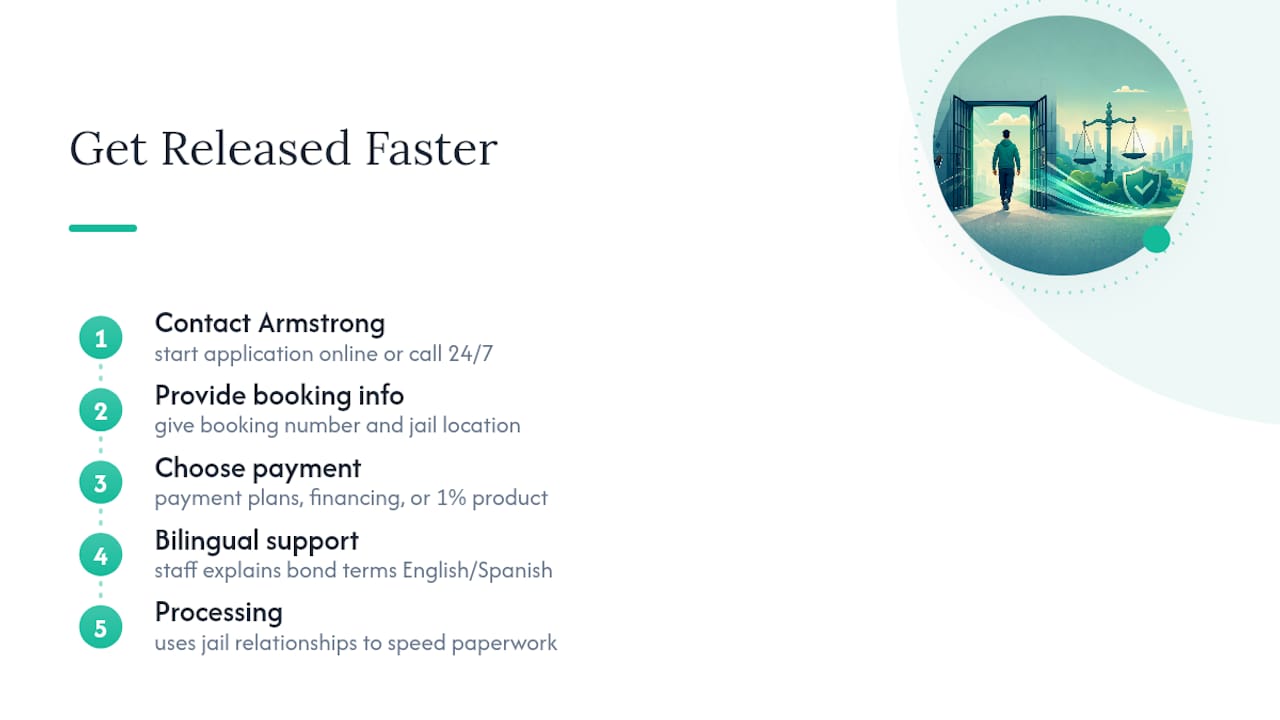
Armstrong Bail Bonds exists for exactly this moment: a vandalism arrest where every hour someone sits in a cell is an hour too many. We’re available 24/7, our application process runs entirely online, and our bilingual staff can walk you through the bond terms in English or Spanish without slowing things down.
What sets us apart isn’t just speed, it’s flexibility on how you pay. If you can’t cover a standard bond fee upfront, we offer payment plans and financing options, including 1 percent bail bond products for clients who qualify, so a tight bank account doesn’t keep a family member behind bars any longer than necessary. Established relationships with local jails can facilitate smoother processing of bond paperwork.
If you’re dealing with a vandalism arrest right now, start the application for a bail bond online or call our team directly. Have the booking number and jail location ready, and we’ll take it from there.
This article is general information, not a substitute for advice from a qualified lawyer. Consult a qualified legal professional about your own circumstances before acting on anything here.
Sources
- California Penal Code §594 (leginfo)
- Santa Clara Superior Court criminal bail schedule (2025)
- Los Angeles Superior Court bail schedule (misdemeanor)
- How much is bail for vandalism? - Bail Agent Network
- Penal Code §594 – Shouse Law Group
FAQ
How long do you go to jail for vandalism in California?
Misdemeanor vandalism carries up to one year in county jail. Felony vandalism, which applies when damage hits $400 or more and prosecutors file it as a wobbler, can mean state prison time, especially with prior convictions on record.
Can vandalism charges be dropped in California?
Yes, particularly when the alleged damage amount is disputed. If an attorney can show the actual repair cost falls under $400, a wobbler filing can sometimes be reduced to a misdemeanor, and in some cases prosecutors decline to file at all if evidence of intent or ownership is weak.
What are the penalties for vandalism charges in California?
Misdemeanor vandalism carries fines up to $1,000 and up to a year in jail; felony vandalism can bring fines up to $10,000, or $50,000 for damage exceeding $10,000, plus possible prison time and mandatory restitution.
Is vandalism hard to prove?
Prosecutors need to prove malicious intent and an accurate damage valuation, and both can be contested. A disputed repair estimate that keeps damage under $400 is one of the most common defense angles in vandalism cases.
How much does a bail bond cost for vandalism in California?
Bail bond fees typically run around 10% of the total bail amount and are non-refundable. Armstrong Bail Bonds also offers flexible payment plans, including 1% bond products for qualifying clients, for those who can’t cover the full fee upfront.