

05 Feb Can Battery Charges be Dropped in California?
If you are wondering if battery charges can be dropped in California, the answer is yes, but the process is more complex than simply having the victim change their mind. In California, once the police are involved, the state—not the individual—decides whether to move forward with a case. To get a battery charge dismissed, you must understand the difference between Simple Battery (PC 242) and Domestic Battery (PC 243e1), as the pathways to freedom for each are very different.
Who Actually Has the Power to Dismiss the Case?
Many people mistakenly believe that if the accuser “drops the charges,” the case is over. This is a dangerous myth. In California, only two entities have the power to stop a prosecution:
The District Attorney (DA): The prosecutor can choose not to file charges (called a “DA Reject”) or dismiss a filed case if they believe the evidence is too weak to win at trial.
The Judge: A judge can dismiss a case for legal reasons, such as a violation of your rights or through new “diversion” laws that allow for a clean record upon completion of certain requirements.
While the victim’s desire to drop charges is a factor, the state often pushes forward even if the victim refuses to testify. This is why having a strong defense and a reliable bail bondsman is crucial.
Common Defenses to Get Battery Charges Dropped
To get a case dismissed, your legal team will likely look for one of these standard California defenses:
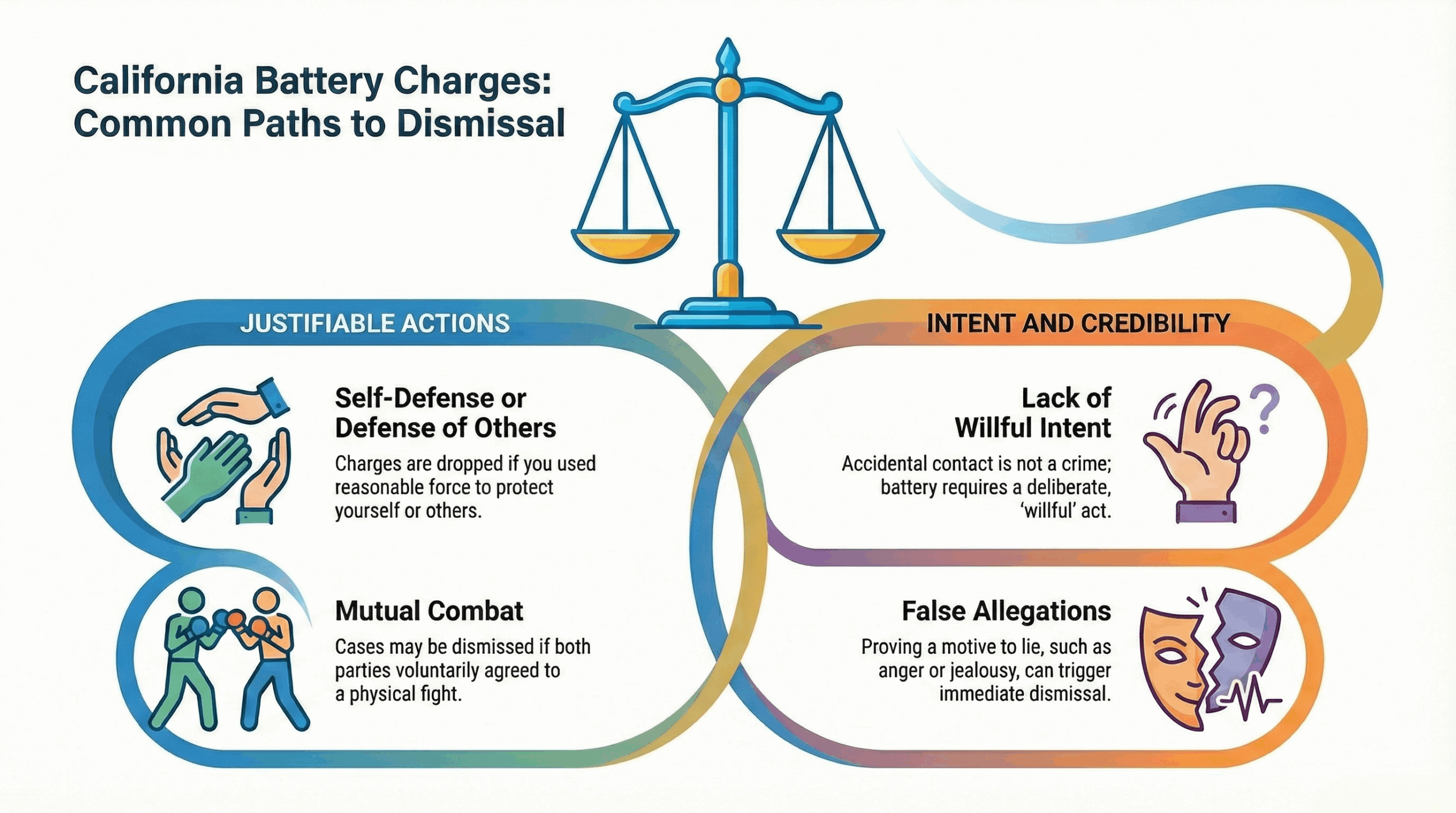
Self-Defense or Defense of Others: If you reasonably believed you were in danger and used only the force necessary to protect yourself, the charges should be dropped.
Lack of Willful Intent: Battery requires a “willful” act. If the contact was an accident—like bumping into someone in a crowded room—it is not a crime.
False Allegations: In high-stress situations, people sometimes lie out of anger or jealousy. Proving a motive to lie can lead to an immediate dismissal.
Mutual Combat: If both parties agreed to a physical fight, the “victim” may not have the legal standing to pursue battery charges.
Strategic Methods for Dismissal (The Content Gaps)
Beyond standard defenses, there are specific California laws that can lead to a dismissed case which many people (and even some lawyers) overlook.
Civil Compromise (Penal Code 1377 & 1378)
For Simple Battery (PC 242) cases that do not involve domestic violence or a child, California allows for a “Civil Compromise.” This means if the victim agrees that they have been financially compensated for any harm (like medical bills or torn clothing) and no longer wishes to prosecute, a judge has the power to dismiss the criminal case entirely. This is one of the fastest ways to protect your record, but it requires the victim’s cooperation.
Pre-Filing Intervention
The most critical time in your case is the “Golden Window”—the period between your arrest and your first court date. During this time, the DA is deciding whether to file formal charges. A proactive attorney can present “mitigation evidence” (like your clean record or witness statements) to the DA before they ever file. If successful, the case is “rejected,” and you never have to step foot in a courtroom.
Judicial Diversion (AB 3234)
A new California law, Assembly Bill 3234, gives judges the power to “divert” misdemeanor battery cases. This means the judge can put your case on hold for up to a year. If you complete requirements like anger management or community service and stay out of trouble, the judge must dismiss the charges. This can happen even if the prosecutor objects.
Mental Health & Military Diversion
California offers specialized paths for veterans (PC 1001.80) or those with qualifying mental health conditions (PC 1001.36). If the incident was related to PTSD, traumatic brain injury, or a mental health disorder, you may be eligible to have the charges dropped in exchange for completing a treatment program.
How to Secure Your Freedom While Fighting the Case
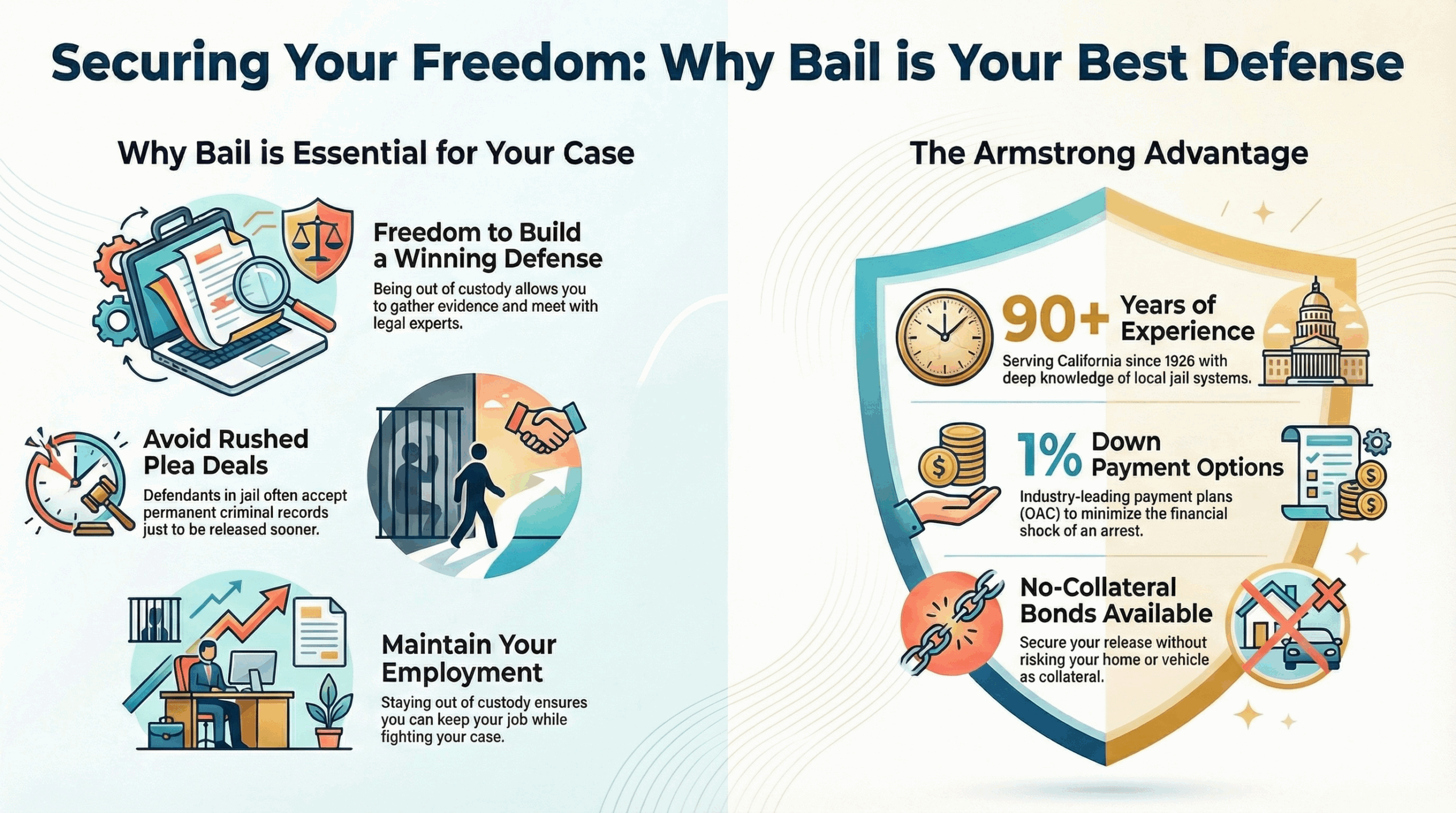
You cannot build a winning defense from inside a jail cell. To take advantage of the strategies above, you need to be out of custody, working with your lawyer, and maintaining your job. This is where Armstrong Bail Bonds becomes your greatest asset.
The Role of Bail in Your Defense
Bail is a financial guarantee to the court that you will show up for your hearings. When you are released on bail, you have the time and privacy needed to gather evidence and meet with experts. Waiting in jail often leads to “plea deals” just to get out—deals that result in a permanent criminal record.
Why Choose Armstrong Bail Bonds?
Since 1926, Armstrong Bail Bonds has been the most trusted name in California bail. When facing battery charges, you need a firm that understands the urgency of the situation.
90 Years of Experience: We have seen every type of battery case and know the local jail systems in LA, Orange County, and San Diego inside and out.
1% Down Payment Options: We know that a sudden arrest is a financial shock. We offer industry-leading payment plans, including 1% down (OAC), so you can focus your funds on a top-tier defense attorney.
No-Collateral Bonds: In many cases, we can secure your release without requiring you to put up your home or car as collateral.
24/7 Professional Support: Our agents are available around the clock to answer your calls and start the release process immediately.
Simple Battery vs. Domestic Battery: Why it Matters
It is important to note that Domestic Battery (PC 243e1) is treated much more strictly. Under California law, a Civil Compromise is not allowed in domestic violence cases. Prosecutors often have “No-Drop” policies for DV, meaning they will prosecute even if the victim begs them to stop. If you are charged with domestic battery, you need to act even faster to secure a bond and retain counsel, as the penalties include mandatory 52-week batterers’ programs and the loss of firearm rights.
FAQ: People Also Ask
1. Can a battery charge be dropped if the victim doesn’t show up to court? Not necessarily. The prosecutor can use the 911 call or police bodycam footage as evidence. However, it makes the state’s case much weaker and increases the chances of a dismissal.
2. How long does it take for battery charges to be dropped? It depends on the strategy. A “DA Reject” happens within weeks, while Judicial Diversion or Civil Compromise can take several months of court monitoring before the final dismissal.
3. Does a dismissed battery charge stay on my record? In California, if a case is dismissed through diversion, the arrest is “deemed to have never occurred” for most employment purposes. However, you may still need to file for a formal sealing of the record to be fully protected.
4. What is the difference between assault and battery? Assault is the attempt or threat to use force; battery is the actual physical contact. You can be charged with both for a single incident.
5. How much is bail for battery in California? Bail varies by county. In many areas, misdemeanor battery bail ranges from $500 to $20,000. With Armstrong Bail Bonds, you only pay a fraction of that amount upfront to get home.
Conclusion: Take Action for Your Freedom
A battery charge is a serious threat to your future, your career, and your reputation. But you don’t have to face it alone. By combining an aggressive legal defense with the fast, affordable support of Armstrong Bail Bonds, you give yourself the best possible chance at a dismissal.
Don’t let a single mistake or a false accusation define your life. Contact Armstrong Bail Bonds today at (800) 573-0000 for a free, confidential consultation. We are available 24/7 to help you get out of jail and back to your family.