


27 Mar What Constitutes a Hit and Run?
Understanding what constitutes a hit and run is essential for every driver, as even a minor mistake can lead to serious criminal charges. In California, a hit and run occurs any time you leave the scene of an accident without first identifying yourself or providing help to those involved. If you or a loved one is facing an arrest or a warrant for leaving the scene, Armstrong Bail Bonds is here to provide the immediate support and financial solutions needed to secure a fast release.
Understanding the Legal Definition of a Hit and Run (CVC 20001 & 20002)
In California, the law is very specific about your duties after a collision. Whether the accident was your fault or not is irrelevant; your legal obligation begins the moment the impact occurs. Under California Vehicle Code (CVC) 20002, a misdemeanor hit and run involves accidents that cause only property damage. CVC 20001, a much more serious “wobbler” offense, applies when an accident results in injury or death.
Regardless of the severity, the law requires you to follow a three-step process:
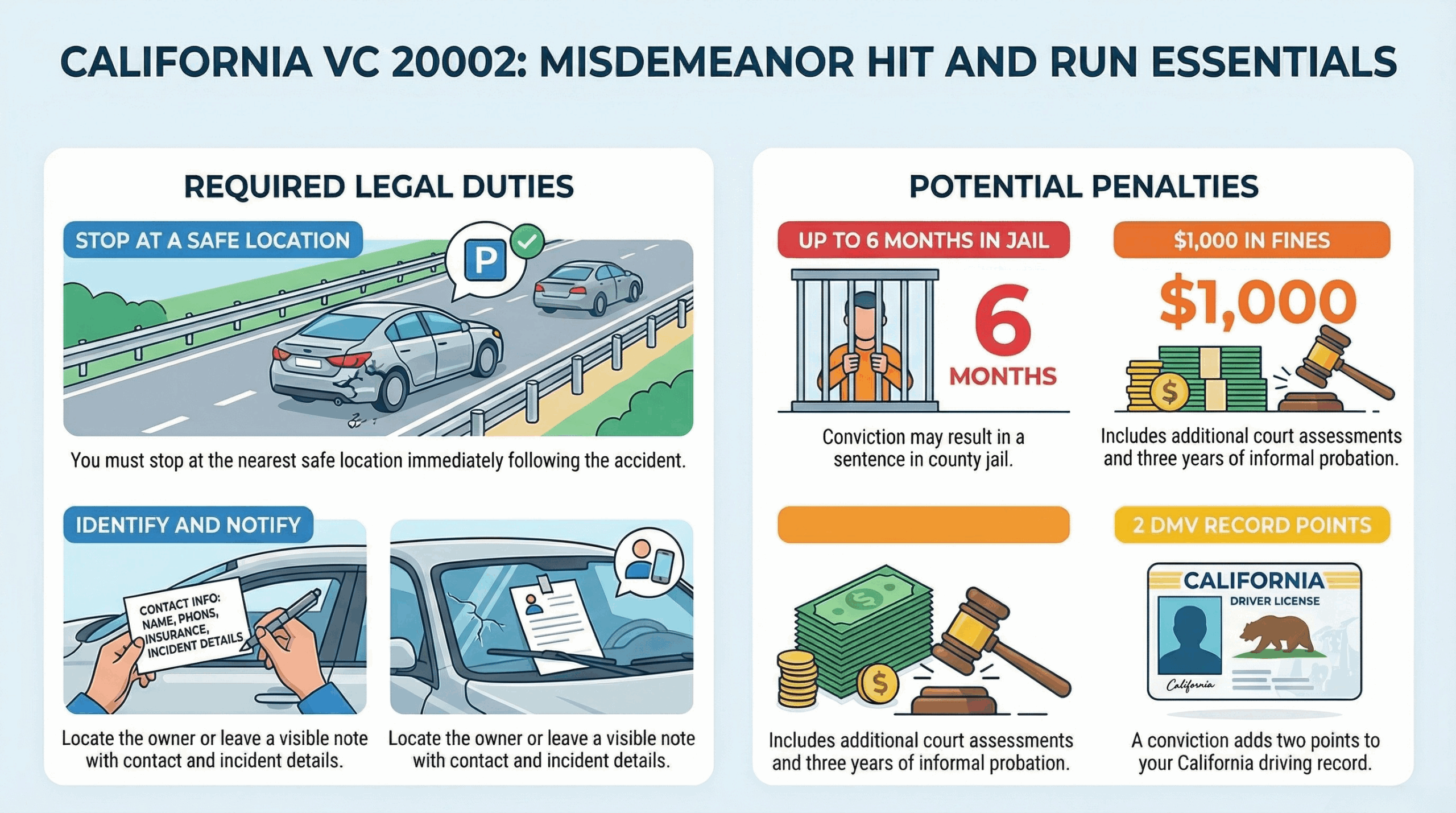
Stop the vehicle immediately: You must pull over at the nearest safe location.
Provide identifying information: This includes your name, current address, driver’s license, and vehicle registration.
Render “Reasonable Assistance”: If someone is hurt, you are legally required to provide or arrange for medical aid, such as calling 911.
The “Unattended Property” Rule
Many people unknowingly commit a hit and run by hitting a parked car or a fence and driving away because no one was there. In these cases, the law requires you to leave a written note in a conspicuous place on the property. This note must include your contact information and a brief description of what happened. You are also required to notify the local police or the California Highway Patrol without delay.
Common Misconceptions: What Still Counts as a Hit and Run
There are several myths that lead drivers into legal trouble. Understanding the reality of these situations can save you from a surprise arrest.
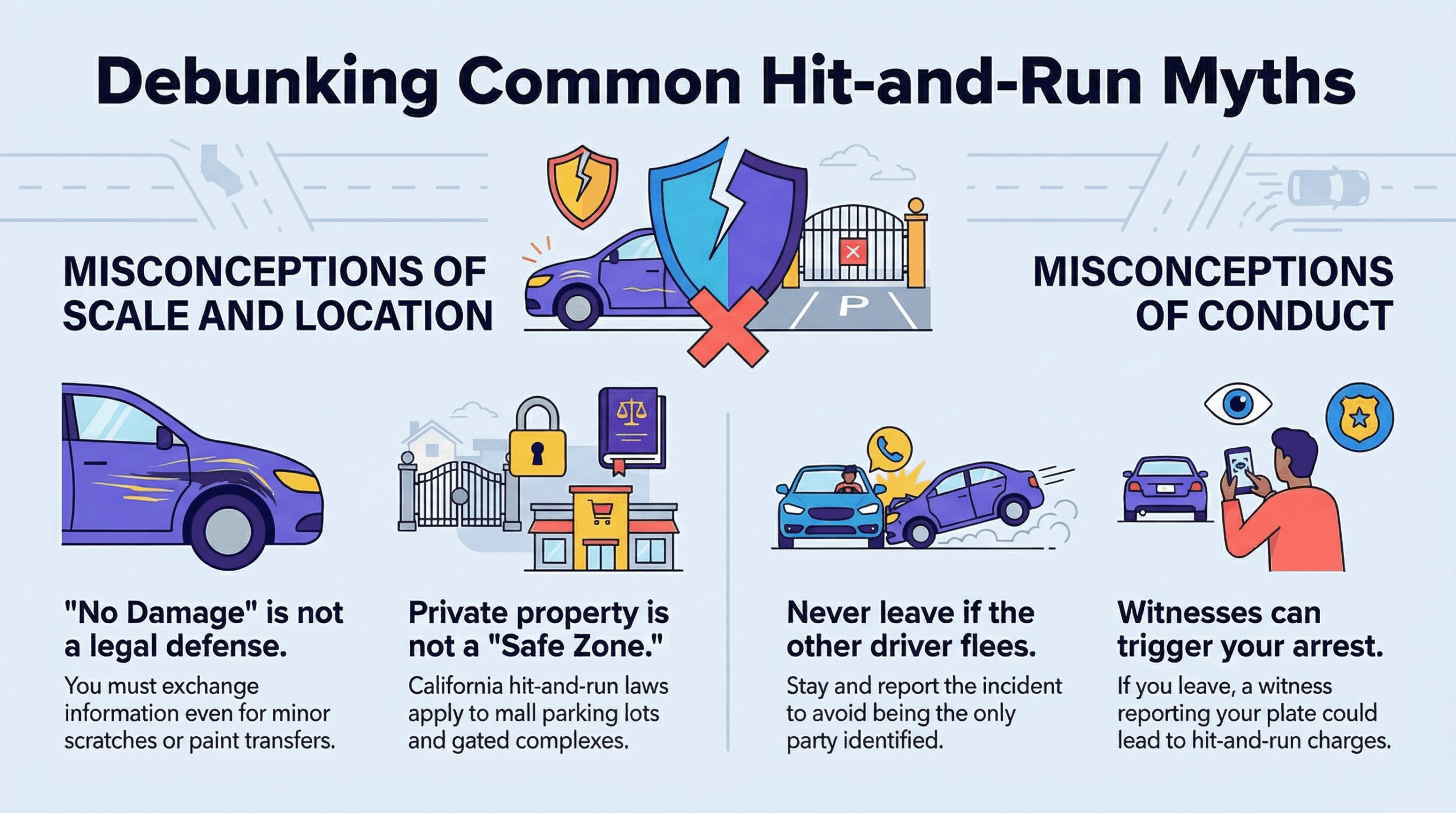
“No Damage, No Crime”: Even if it looks like a “paint transfer” or a tiny dent, you cannot leave until you have exchanged information. If the other party later finds a scratch you missed, they can file a police report.
“Private Property Protection”: Many drivers believe traffic laws don’t apply in mall parking lots or gated apartment complexes. This is false. California hit-and-run laws apply on both public roads and private property.
“The Other Person Left First”: If the other driver speeds off, you should still stay and report the incident. If you also leave, and a witness only catches your license plate, you could be the one facing charges.
Misdemeanor vs. Felony: Penalties and Bail Amounts
The consequences of a hit and run depend entirely on the outcome of the crash. Understanding the potential bail amounts is the first step in planning for a release from custody.
Misdemeanor Hit and Run (CVC 20002)
If the accident only caused property damage, it is usually charged as a misdemeanor. Penalties can include up to 6 months in county jail and fines of $1,000. Bail for misdemeanors is often set according to a county’s standard bail schedule, typically ranging from $500 to $5,000.
Felony Hit and Run (CVC 20001)
When an injury or death is involved, the charge can escalate to a felony. If convicted, you could face up to 4 years in state prison and fines up to $10,000. Because the stakes are higher, bail amounts spike significantly. It is common to see felony hit-and-run bail set between $20,000 and $50,000, or even higher if there was a fatality.
Arrested for a Hit and Run? How the Bail Process Works
Being arrested is an overwhelming experience. Once you are taken into custody, you will go through the booking process, which involves fingerprinting, photographs, and a background check. This can take anywhere from 2 to 6 hours depending on the facility, such as the Glendale Police Department or a larger Los Angeles County jail.
Once booking is complete, you have three options:
Wait in Jail: You can stay in custody until your arraignment (usually 48–72 hours).
Post Cash Bail: You can pay the full bail amount (e.g., $25,000) to the court. This money is returned after the case ends, but it ties up a huge amount of capital.
Use a Bail Bond: By contacting Armstrong Bail Bonds, you pay a small percentage of the total bail, and we post the full amount for you, allowing you to go home within hours.
Financial Solutions: Making Bail Affordable
At Armstrong Bail Bonds, we believe that your financial situation should not determine your freedom. We provide several missing “gaps” in the standard bail process to ensure families can afford a release.
The 1% Down Payment Plan: For those who qualify, we offer extremely low down payments to start the bonding process immediately.
No-Collateral Bonds: In many hit-and-run cases, we can secure a bond based on your signature and a qualified co-signer, meaning you don’t have to put your house or car at risk.
Interest-Free Financing: We offer flexible payment plans that fit your monthly budget. We don’t believe in surprise fees or high-interest rates during a family crisis.
Valid Defenses and Critical Next Steps
If you are being investigated, it is important to know that there are defenses to these charges. A common defense is “Lack of Knowledge.” If you hit a piece of debris or a small animal and truly didn’t realize it was a person or a vehicle, your attorney may be able to argue you lacked the “willful” intent required for a conviction.
Another defense is the “Emergency Rule.” If you left the scene because you felt your life was in immediate danger—for example, a hostile crowd began to gather—you may have a legal justification for leaving to report the incident from a safer location.
Frequently Asked Questions (People Also Ask)
Q: Can I be arrested for a hit and run days after the accident? A: Yes. If a witness recorded your plate or a security camera caught the incident, police may visit your home days or even weeks later to make an arrest or issue a citation.
Q: How do I find out if there is a warrant for my arrest? A: You can use a warrant check service. Armstrong Bail Bonds can help you determine if a warrant has been issued in Southern California so you can handle the situation proactively with an “In-Hand” bond.
Q: What is a “Civil Compromise”? A: In some misdemeanor cases, if you pay for all the damages and the victim agrees to drop the matter, a judge may dismiss the criminal charges. However, this is not a guarantee and requires a skilled lawyer.
Q: Does my insurance cover a hit and run? A: Your insurance may cover the damages to the other party, but they will not pay your bail or your criminal fines. Additionally, a hit-and-run conviction usually results in 2 points on your DMV record, significantly raising your premiums.
Q: What information does a bail bondsman need? A: To get started, we simply need the defendant’s full name, their date of birth, and the name of the jail where they are being held.
Contact Armstrong Bail Bonds Today
Since 1926, Armstrong Bail Bonds has been the most trusted name in Southern California bail services. We understand that a hit-and-run charge is a frightening experience that threatens your job, your license, and your freedom. Our experienced agents are available 24 hours a day, 7 days a week to provide discreet, professional, and fast assistance in Los Angeles, Orange County, San Diego, and Glendale.
Don’t wait in a cell while your future hangs in the balance. Call us now at 800-241-2171 or visit our contact page to start the release process immediately.