

12 Aug How Can I Remove Myself as a Cosigner on a Bail Bond?
If you are asking, “How can I remove myself as a cosigner on a bail bond?” you are likely facing a stressful financial or personal situation that requires immediate action. When you signed that indemnity agreement, you promised the bail company that the defendant would follow court orders. But if circumstances have changed—or if you suspect the person you bailed out is planning to skip town—you have legal options to protect yourself before it is too late.
If you are facing a bail emergency or need clear guidance on a California bail bond, Contact Armstrong Bail Bonds immediately at (818) 241-2171. Our licensed, family-owned team is available 24/7 to answer your questions and protect your financial well-being.
Understanding Your Legal & Financial Role as a Cosigner
Before jumping into the revocation process, it helps to understand what you legally agreed to when signing the bond paperwork.
What Does it Mean to Cosign a Bail Bond?
When you act as a cosigner (legally referred to as an indemnitor), you enter into a binding contract with both the court and the bail bond agency. You are guaranteeing two major things:
The defendant will appear at every required court date until their case reaches a final verdict.
You will pay any remaining balance on the bail premium fee or administrative costs.
Many people confuse paying the initial 10% bail fee with being a cosigner. Paying the fee covers the service, but signing the indemnity agreement binds your personal assets—such as your savings, home, or vehicle—to the defendant’s behavior.
Key Risks You Took On
As a cosigner, your financial exposure goes far beyond the initial fee. If the defendant fails to appear in court, you risk:
Paying the Full Bail Amount: If the court sets bail at $50,000 and the defendant flees, you owe the entire $50,000 to the bail agency.
Bounty Hunter Recovery Fees: You can be held financially responsible for the costs incurred to track down and apprehend the defendant.
Unpaid Installment Plans: If you set up a monthly payment plan for the bail premium, you remain responsible for those payments regardless of what happens between you and the defendant.
Can You Legally Remove Myself as a Bail Bond Cosigner?
The short answer is yes, you can remove yourself as a cosigner—but under specific conditions.
The Short Answer: Yes, But With Conditions
You cannot simply check a box online or send a quick text message to cancel a bail agreement. Because a bail bond is a formal legal contract between you, the bail agency, and the judicial system, releasing you from liability requires a formal legal process called revoking the bond or surrendering the defendant.
When you revoke a bond, you are revoking your financial guarantee. Because the defendant cannot remain free without a financial guarantee backing them, revoking your signature means the bail bond company must return the defendant to jail unless a replacement cosigner steps in.
Valid Reasons a Bondsman Will Accept Your Request
Bail bond agencies do not automatically revoke bonds just because two friends had an argument. However, licensed bondsmen will act swiftly if you provide valid, risk-based reasons. Common grounds for revoking a bond include:
┌────────────────────────────────────────────────────────────────────────┐
│                        VALID GROUNDS FOR REVOCATION                    │
├────────────────────────────────────────────────────────────────────────┤
│  • Flight Risk: Talking about leaving town, buying tickets, hiding     │
│  • Rule Breaches: Using illegal drugs, contacting protected victims   │
│  • Communication Loss: Cutting off contact, disconnecting phone lines   │
│  • Material Changes: Quitting job, moving addresses without notice     │
│  • Broken Agreements: Refusing to pay agreed-upon bond installments    │
└────────────────────────────────────────────────────────────────────────┘
Step-by-Step: How to Revoke or Remove Yourself from a Bail Bond
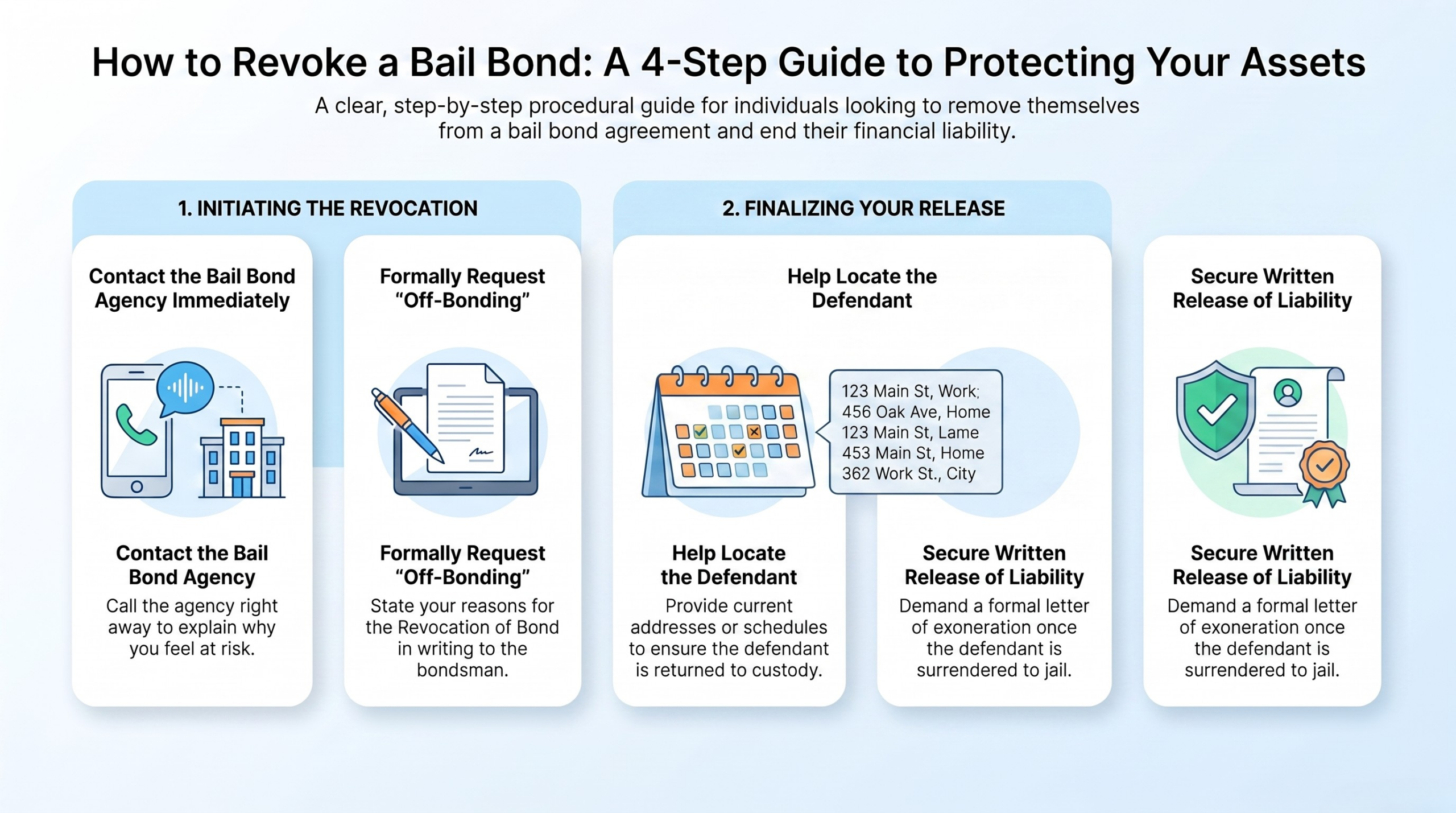
If you need to get off a bail bond immediately, taking the right procedural steps will protect your assets and streamline the process.
Contact the Bail Bond Company Immediately
Do not wait until the day before a court appearance. Call the bail bond agency that wrote the policy right away. Explain clearly why you feel at risk. If you used Armstrong Bail Bonds, our 24/7 agents will review your agreement and discuss your options over the phone without delay.
Request a “Revocation of Bond” (Off-Bonding)
Inform the bondsman that you want to execute a formal Revocation of Bond (sometimes called “off-bonding”). You will be asked to state your reasons in writing. If the bondsman agrees that the flight risk or contract breach is valid, they will initiate the paperwork to surrender the bond to the court.
Help Locate the Defendant (If Required)
To be fully released from your indemnity agreement, the defendant must be back in official custody or turned over to the court. Providing the bail bond agency with the defendant’s current home address, work schedule, or known hangouts speeds up the surrender process and minimizes safety risks for everyone involved.
Secure Written Confirmation of Release from Liability
Never assume you are off the hook verbally. Once the defendant is surrendered back to the jail facility, demand a written Release of Liability or a formal letter of exoneration from the bail agency. Store this document safely alongside your original receipts.
What Happens to the Defendant When You Revoke Bail?
When a cosigner successfully revokes a bond, the legal machinery moves quickly. Here is what happens behind the scenes:
┌─────────────────────────────────────────────────────────────────────────┐
│                    THE BOND REVOCATION TIMELINE                         │
├─────────────────────────────────────────────────────────────────────────┤
│ 1. Bondsman Reviews Request ──> Evaluates flight risk & contract terms  │
│ 2. Defendant Arrested      ──> Bail surrender warrant executed           │
│ 3. Return to Jail Custody  ──> Defendant booked back into local facility│
│ 4. Securing New Bail       ──> Defendant must post cash or new cosigner  │
│ 5. Cosigner Released       ──> You receive written exoneration document │
└─────────────────────────────────────────────────────────────────────────┘
The Bondsman Reviews and Approves the Request: The agency verifies that the cosigner’s concerns are legitimate and that revoking the bond complies with state insurance codes.
The Defendant Is Taken Back Into Custody: Licensed bail agents or recovery specialists execute a surrender warrant to apprehend the defendant and return them to the holding facility.
The Defendant Must Secure a New Cosigner or Post New Bail: Once back in jail, the defendant remains in custody until they can pay full cash bail or find another person willing to act as an indemnitor.
The Cosigner Is Released from Future Financial Liability: As soon as the jail re-books the defendant, your legal duty to guarantee their future court appearances ends completely.
Financial Consequences: Do You Get Your Premium or Collateral Back?
One of the most common questions cosigners ask when backing out is: “What happens to the money I already paid?” Understanding the difference between non-refundable fees and collateral is essential.
Will You Get the 10% Non-Refundable Fee Back?
In the state of California, bail bond premiums are set by law (typically 10% of the total bail amount). This fee represents the non-refundable payment earned by the bail company for processing the paperwork and risking their capital to get the defendant out of jail.
Even if you revoke the bond 24 hours after signing, you will not get the 10% premium back. The service was fully rendered the moment the jail released the inmate.
How Collateral Is Handled Upon Release
Unlike the premium fee, collateral is 100% refundable. Collateral includes assets you pledged to back up the bond—such as vehicle titles, real estate deeds, jewelry, or cash deposits.
Once the defendant is returned to custody and the bail bond agency receives an official court exoneration notice, the agency is legally required to return your collateral. Processing timelines vary depending on state regulations, but most agencies return cash or property titles within 14 to 30 days of exoneration.
Potential Outstanding Fees You Still Owe
If you signed a payment plan to cover the 10% premium, revoking the bond does not erase your debt for the time served. Furthermore, if the bondsman had to hire a recovery agent to locate and surrender the defendant based on your request, those administrative or surrender costs may be deducted from your collateral or billed to you directly.
Special Circumstances: What If the Defendant Has Already Missed Court?
If the person you bailed out has already missed their scheduled court hearing, your situation goes from concerning to critical.
┌────────────────────────────────────────────────────────────────────────┐
│                        IF THE DEFENDANT SKIPS COURT                    │
├────────────────────────────────────────────────────────────────────────┤
│  • A bench warrant is issued instantly for the defendant's arrest.    │
│  • A court forfeiture clock starts (usually 180 days in California).   │
│  • You are on the hook for the FULL bail amount if they aren't found.  │
│  • Action: Call Armstrong Bail Bonds immediately at (818) 241-2171.    │
└────────────────────────────────────────────────────────────────────────┘
Cosigning After a Bench Warrant Is Issued
When a defendant misses court, the judge immediately issues a bench warrant and orders a bail forfeiture. At this stage, you cannot simply “revoke” your signature through standard paperwork. The bail bond agency is now facing a deadline set by the court (typically 180 days in California) to produce the defendant or pay the full face value of the bond.
How to Protect Your Assets If the Defendant Is Missing
If the defendant is actively hiding, your top priority is preventing the bail agency from seizing your collateral or suing you for the full bond amount.
Contact the Bail Agency Immediately: Inform them that the defendant missed court and share any details you have regarding their whereabouts.
Encourage a Re-Docketing: If the defendant missed court due to a genuine emergency (like a medical crisis or car accident), an experienced bail bondsman can often help file a motion to recall the bench warrant and reinstate the bond without taking the defendant back to jail.
Cooperate with Recovery Agents: Working side-by-side with the agency’s recovery team keeps costs down and ensures the defendant is returned before the forfeiture deadline expires.
Alternatives to Revoking the Bond Completely
Revoking a bond and sending a friend or family member back to jail can damage your personal relationship forever. Before taking that drastic step, consider these alternative solutions: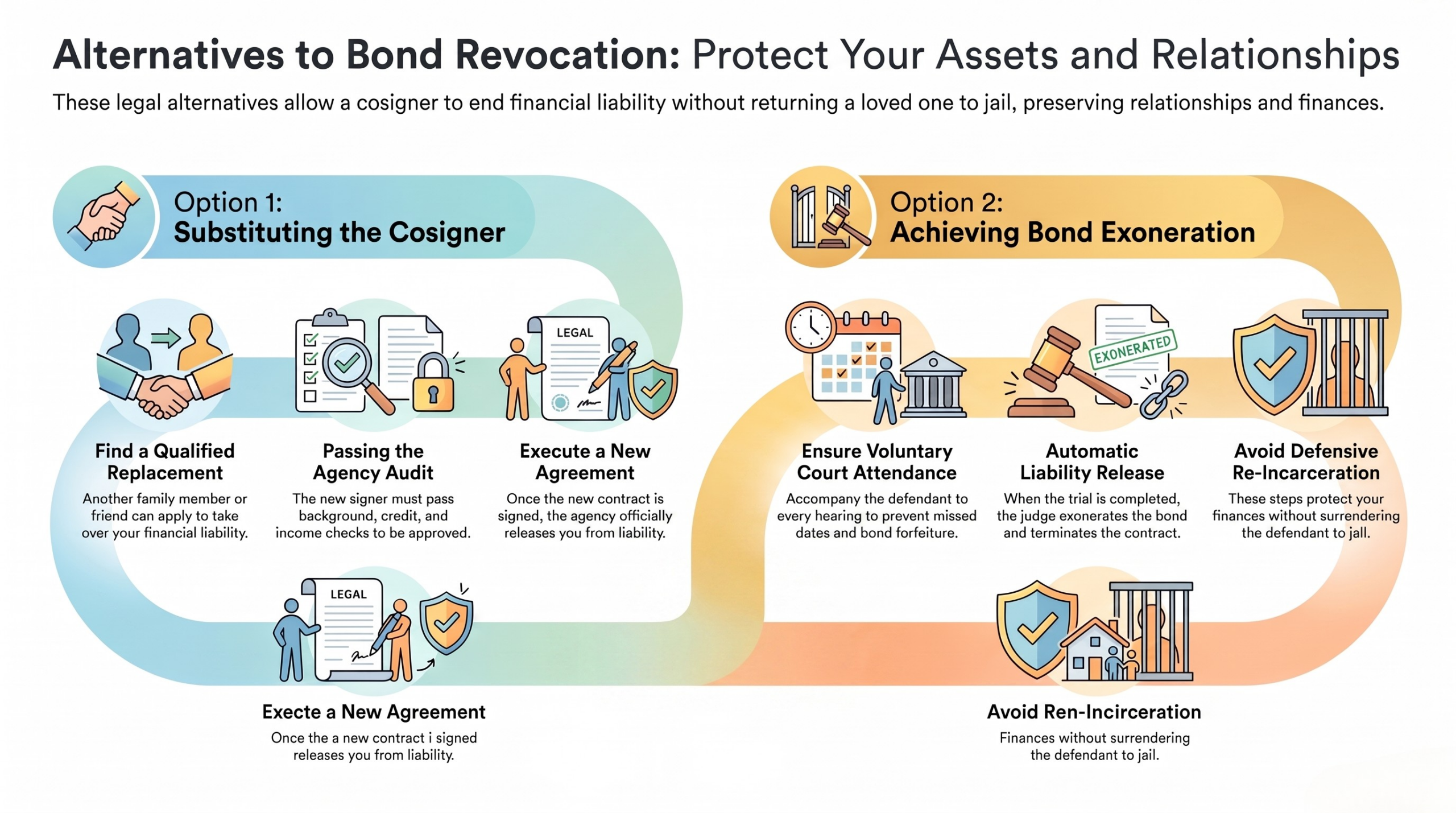
Substituting the Cosigner
If you can no longer afford the financial liability—or if you simply want out of the agreement—you can ask the bail agency for a Cosigner Substitution.
Another qualified family member or friend can apply to replace you. The new indemnitor must undergo a background and credit check, meet the agency’s income requirements, and sign a fresh indemnity agreement. Once the new contract is executed, the agency officially releases you from liability.
Encouraging Voluntary Court Appearances
If your primary fear is that the defendant will miss an upcoming court date, accompany them to court yourself. When a defendant attends every hearing and completes their trial, the judge automatically exonerates the bond. Exoneration terminates the bail contract naturally, releasing you from all financial responsibility without having to surrender the defendant to jail.
Frequently Asked Questions (FAQ)
Can the defendant sue me for revoking their bail bond?
Generally, no. As a cosigner, you are under no legal obligation to maintain a financial guarantee on someone else’s behalf. Acting as an indemnitor is a voluntary gesture. Provided you did not commit fraud or breach a separate civil contract with the defendant, revoking a bond is a lawful exercise of your rights under the bail contract.
Can a bail bondsman refuse to release me as a cosigner?
A bail bond company can refuse your request if you do not have a valid risk-based reason or if the defendant is adhering to all terms of the agreement. Because revoking a bond requires arresting and re-booking an individual, bondsmen will not execute a surrender over trivial personal arguments. However, if you prove the defendant is a flight risk, breaking laws, or failing to pay agreed fees, the agency will almost always comply to protect their own financial exposure.
How long does it take to process a cosigner release once requested?
The paperwork to request a release takes less than an hour. However, your legal liability does not officially end until the defendant is physically surrendered back into law enforcement custody or a substitute cosigner completes their paperwork. Depending on how quickly the defendant can be located or re-booked, the full process can take anywhere from a few hours to a couple of days.
What happens to my collateral if the charges against the defendant are dropped?
If the prosecutor drops all charges or the court dismisses the case, the judge will issue a formal bond exoneration. Once the bail bond agency receives proof of exoneration from the court clerk, your collateral will be returned to you in full, minus any delinquent installment fees owed on the premium.
Can I remove myself as a cosigner if I live in a different state?
Yes. Distance does not prevent you from revoking a bond. You can initiate the process over the phone, complete necessary revocation affidavits electronically, and work with local recovery specialists. Reputable agencies like Armstrong Bail Bonds handle interstate paperwork and out-of-county cases every day.
Protect Your Finances with Southern California’s Most Trusted Bail Team
Navigating a bail contract when relationships turn sour or risk levels rise can leave you feeling trapped. But you do not have to handle the legal complexities alone. Whether you need to remove yourself as a cosigner, replace an existing indemnitor, or secure a fast bail bond for a loved one in Southern California, Armstrong Bail Bonds is here to help.
Family-owned and operated since 1926, Armstrong Bail Bonds brings nearly a century of compassionate, professional experience to every case across Los Angeles County, Orange County, San Diego, and Glendale. We offer clear advice, flexible payment plans, and fast 24/7 service.