

04 Feb What are the Consequences of Being Charged with Assault?
Understanding the consequences of being charged with assault is the first step toward protecting your future and your freedom. While many people assume an arrest automatically leads to a conviction, the period between being charged and your court date is critical for your defense. Navigating the legal system is overwhelming, but knowing what to expect can help you make the right decisions for your family and your career.
Understanding the Charge: Assault vs. Battery
To fight an assault charge, you must first understand exactly what the state is accusing you of doing. While the terms are often used together, they represent different legal concepts.
Assault: This is an attempt to cause physical injury to another person or a “threatening act” that causes someone to feel they are about to be harmed. You do not actually have to touch someone to be charged with assault.
Battery: This occurs when there is actual physical contact. If an attempt to harm (assault) is successful, it becomes battery.
Simple vs. Aggravated Assault: Simple assault is usually a misdemeanor involving minor threats or no weapon. Aggravated assault is a felony charge involving a deadly weapon, intent to commit a serious crime (like robbery), or an attack on a protected official (like a police officer).
The Immediate Crisis: Arrest and Pre-Trial Detention
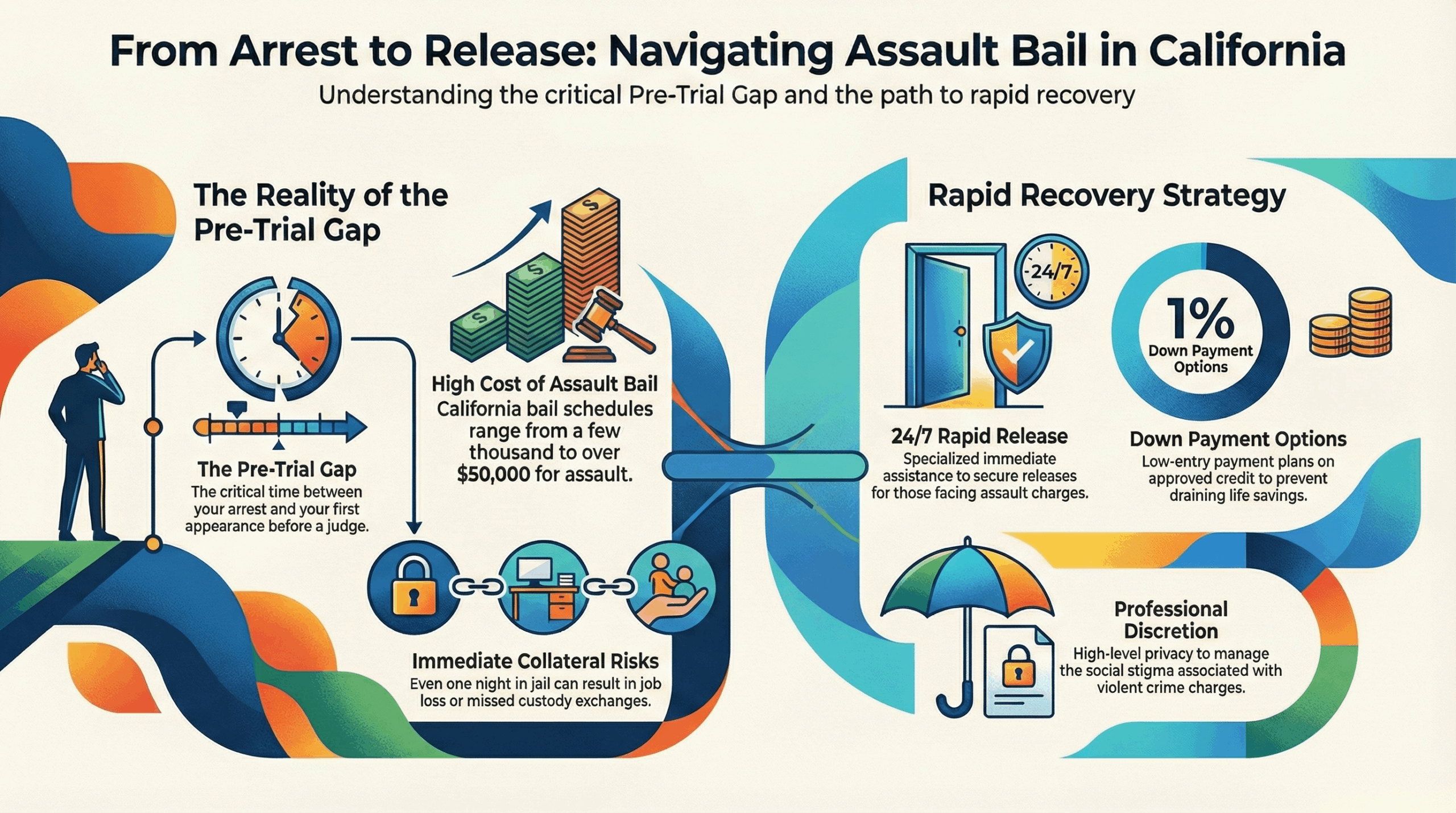
The moment the handcuffs go on, your life is put on hold. The immediate consequence of an assault charge is being taken into custody, where you will be booked and processed. This is the “Pre-Trial Gap”—the time between your arrest and your first appearance before a judge.
During this time, you may feel pressured to give a statement or accept a deal. However, your most urgent priority is getting out of a cell so you can speak with an attorney in a safe, private environment.
Understanding California Bail Schedules
In California, bail is set based on a “Bail Schedule” determined by the county. For assault charges, the amount can range from a few thousand dollars for a misdemeanor to over $50,000 for aggravated assault.
How Armstrong Bail Bonds Expedites Your Release
Staying in jail even one night can result in losing your job or missing child custody exchanges. Armstrong Bail Bonds provides a lifeline during this crisis. With 24/7 availability, they specialize in securing rapid releases for those facing assault charges.
Affordability: They offer 1% down payment options (on approved credit), making it possible to get home without draining your life savings.
Discretion: Being charged with a violent crime carries a social stigma; Armstrong handles every case with the highest level of professionalism and privacy.
Legal Penalties: Fines, Jail, and Probation
If you are convicted of assault, the judge will determine your sentence based on the severity of the incident and your prior criminal record.
-
Jail or Prison Time: A misdemeanor assault can lead up to six months or a year in county jail. A felony aggravated assault conviction can result in multiple years in state prison.
-
Fines and Restitution: Court fines can cost thousands of dollars. Additionally, the court may order “restitution,” which requires you to pay for the victim’s medical bills, counseling, or damaged property.
-
Probation: You may be released under supervision. This often includes regular check-ins with a probation officer, random drug testing, and “stay-away” orders from certain locations.
-
Mandatory Classes: Many assault sentences require the completion of a 12-week or 52-week anger management or batterer’s intervention program.
Collateral Consequences: The “Hidden” Costs of a Charge
The consequences of an assault charge extend far beyond the courtroom. Even if you aren’t sentenced to jail, the “criminal record” can follow you for decades.
Employment and Career Impact
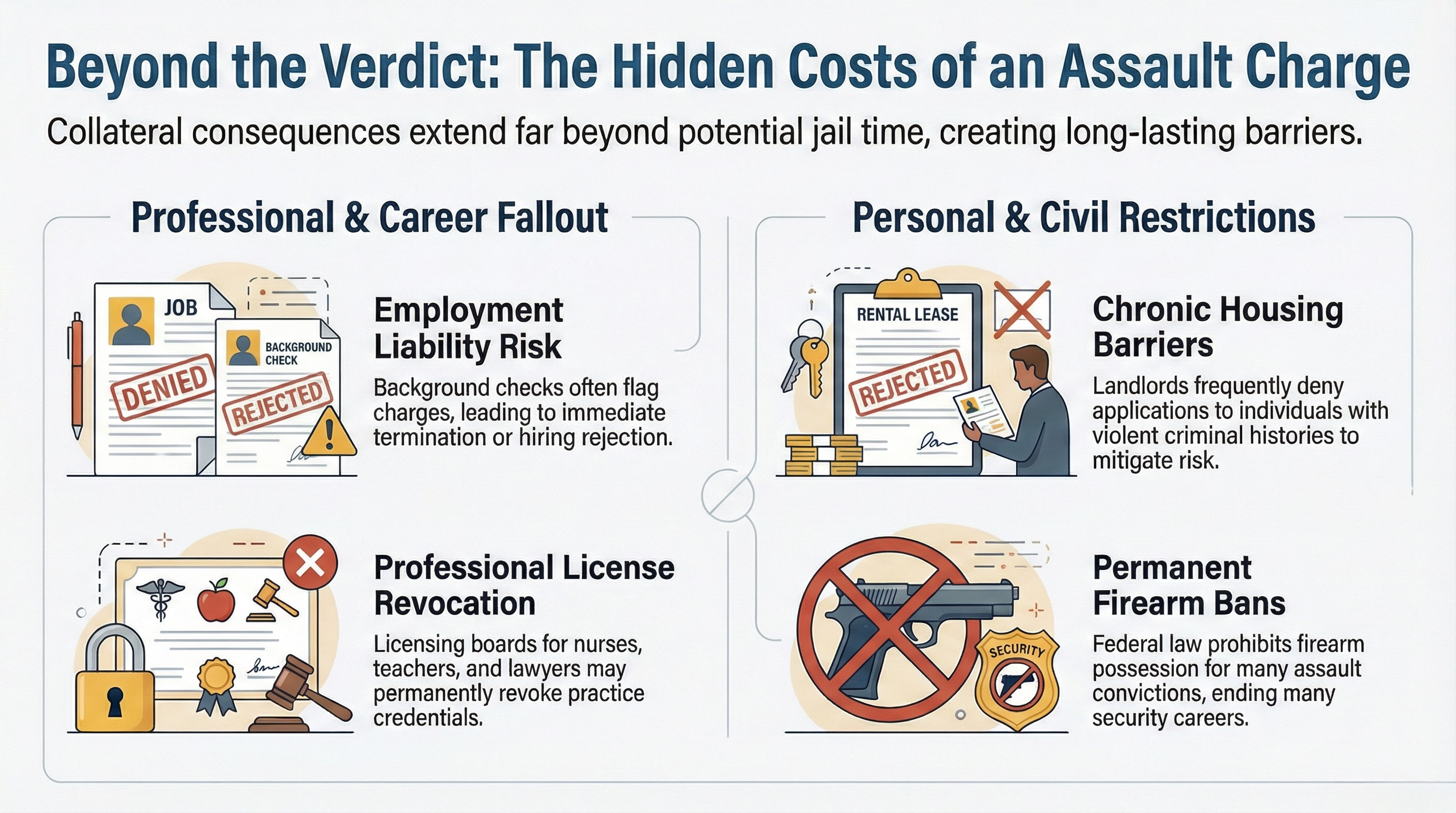
Most employers conduct background checks before hiring. An assault charge on your record can flag you as a “liability” or a safety risk. For those in “at-will” employment states, a company may legally fire an employee simply for being charged with a crime, especially if the job involves interacting with the public.
Professional Licensing
If you are a nurse, teacher, real estate agent, or lawyer, a violent crime charge must be reported to your licensing board. This can result in the immediate suspension or permanent revocation of your license to practice.
Housing Barriers
Landlords frequently deny applications to individuals with violent criminal histories to protect their property and other tenants. A charge can make it incredibly difficult to find safe, affordable housing for your family.
Loss of Civil Rights
Under the Lautenberg Amendment, anyone convicted of a misdemeanor crime of domestic violence—and most felony assault charges—is prohibited from owning or possessing a firearm. This is a permanent federal ban that can end a career in law enforcement or the military.
Domestic Violence Assault: Special Considerations
Assault charges involving a domestic partner, spouse, or co-parent are handled with extreme severity. In many jurisdictions, once the police are called to a domestic dispute, they must make an arrest if they see evidence of a struggle.
Emergency Protective Orders (EPO): A judge can issue an EPO immediately, barring you from your own home and preventing you from seeing your children.
Custody Battles: An assault charge is often used as evidence in family court to prove a parent is “unfit,” which can lead to supervised visitation or the total loss of custody.
Why Staying in Jail is a “Secondary Penalty”
Waiting for your trial behind bars is one of the most significant disadvantages a defendant can face. This is often called the “punishment before the trial.”
When you remain in custody:
You can’t work: This leads to a total loss of income, making it impossible to pay for a high-quality private defense attorney.
Communication is limited: It is much harder to review evidence and speak with your legal team from inside a jail.
Pressure to Plea: Many people plead guilty to crimes they didn’t commit just to get out of jail and go home.
By using Armstrong Bail Bonds to secure your release, you are buying the time and resources necessary to build a strong defense. You can return to your job, take care of your family, and meet with your lawyer in a professional setting.
Common Defenses Against Assault Charges
Being charged is not the same as being guilty. There are several legal strategies used to fight assault allegations:
Self-Defense: Proving that you only used force because you reasonably feared for your own safety.
Defense of Others: Showing that you acted to protect a child, family member, or bystander from harm.
Lack of Intent: Assault requires the “intent” to cause fear or harm. If the incident was an accident, the charges may be dropped.
False Accusations: It is unfortunately common for people to fabricate assault stories during messy divorces or personal vendettas.
Managing the Consequences: Your Path Forward
If you or a loved one has been arrested, follow these steps to manage the fallout:
-
Secure Release Immediately: Contact a reputable agency like Armstrong Bail Bonds. Getting out of jail is the first priority to stabilize your life.
-
Exercise Your Right to Silence: Do not explain “your side of the story” to the police without an attorney present.
-
Hire a Specialist: Find a criminal defense attorney who specifically handles assault and battery cases.
-
Follow Bond Conditions: Once you are out on bail, follow every rule set by the court. Missing a court date or getting into further trouble will lead to your bond being revoked.
People Also Ask (FAQ)
Can an assault charge be dropped if the victim doesn’t want to press charges? In most states, only the prosecutor (the government) can drop charges. Even if the victim changes their mind, the state can move forward with the case if they believe they have enough evidence.
What is the difference between a misdemeanor and a felony assault? The main difference is the severity of the injury or the presence of a weapon. Misdemeanors usually involve threats or minor scrapes, while felonies involve “great bodily injury” or deadly weapons.
Will an assault charge show up on a background check? Yes. Both an arrest and a conviction will appear on a standard criminal background check unless the record is successfully expunged or sealed.
Can I travel to Canada with an assault charge? Canada has very strict “criminal inadmissibility” rules. Even a single misdemeanor assault charge can lead to being turned away at the border or denied an Electronic Travel Authorization (eTA).
How much does a bail bond cost for assault? In California, the standard premium is 10% of the total bail amount. However, Armstrong Bail Bonds offers specialized rates and payment plans as low as 1% down (OAC) to help families in crisis.
Does a “No-Contact Order” mean I can’t go home? If the alleged victim lives in your home, yes. A no-contact order usually requires you to stay a certain distance (often 100 yards) away from the victim’s residence and workplace.
Secure Your Freedom Today
An assault charge is a heavy burden, but you don’t have to carry it from a jail cell. Protecting your rights begins with securing your release so you can prepare a proper defense. Armstrong Bail Bonds has been helping Southern California residents navigate the bail process with dignity and speed since 1926.
Don’t let a single mistake or a misunderstanding ruin your future. Call Armstrong Bail Bonds today at (800) 906-0906 or visit our website to start the bail process immediately. We are available 24/7 to bring your loved ones home.