

03 Apr What Type of Crimes Have No Bail in California? 2026 Guide
Understanding what type of crimes have no bail in California can be a frightening and confusing experience for families. In the California legal system, while most people have a right to be released on bail, certain serious charges or circumstances can lead a judge to deny bail entirely. If you or a loved one is facing a “no bail” hold, knowing the law is the first step toward regaining your freedom.
Understanding “No Bail” vs. “Zero Bail” in California
Before diving into specific crimes, it is vital to distinguish between two terms that often confuse people: “No Bail” and “Zero Bail.”
No Bail occurs when a judge determines that a defendant should not be released under any circumstances. In these cases, even if you have millions of dollars, the court will not accept it. The defendant must remain in custody until their trial or until a subsequent hearing changes the ruling. This is governed by the California Constitution, Article I, Section 12, which gives judges the power to protect the public by keeping certain individuals detained.
Zero Bail, on the other hand, refers to an emergency policy (often seen during the COVID-19 pandemic and now reflected in various county “Pretrial Release” programs) where people accused of low-level, non-violent crimes are released without having to pay any money.
If you are told your crime is “ineligible for zero bail,” it simply means you must pay a set amount of money (bail) to get out. Armstrong Bail Bonds can help you navigate these costs, but if the order is “No Bail,” the legal hurdle is much higher.
The “Big Three”: Crimes Where Judges Frequently Deny Bail
In California, there are three primary categories of crimes where the court is constitutionally permitted to deny bail.
Capital Crimes (Murder with Special Circumstances)
The most common reason for a “no bail” hold is a capital crime. This usually involves first-degree murder with “special circumstances,” such as multiple murders, murder for financial gain, or murder involving torture. Under California law, bail can be denied for these crimes when the “facts are evident or the presumption great” that the defendant is guilty.
Felony Offenses Involving Acts of Violence
Even if the crime isn’t a capital offense, a judge can deny bail if the defendant is charged with a felony involving violence. To do this, the prosecution must prove there is a “substantial likelihood” that the defendant’s release would result in great bodily harm to others. The judge looks at the severity of the injuries and whether weapons were used.
Felony Sexual Assault Offenses
Specific charges such as forcible rape, lewd acts with a child under 14, or continuous sexual abuse of a child are treated with extreme caution. If a judge finds clear and convincing evidence that the defendant poses a threat to the victim or the community, they have the authority to issue a no-bail order.
Crimes Ineligible for California’s “Zero Bail” Policy
Many people search for “no bail” because they were told they cannot get out for free. While California has moved toward more equitable release programs, many “Serious” and “Violent” felonies are excluded from automatic release. You will likely need a bail bond for:
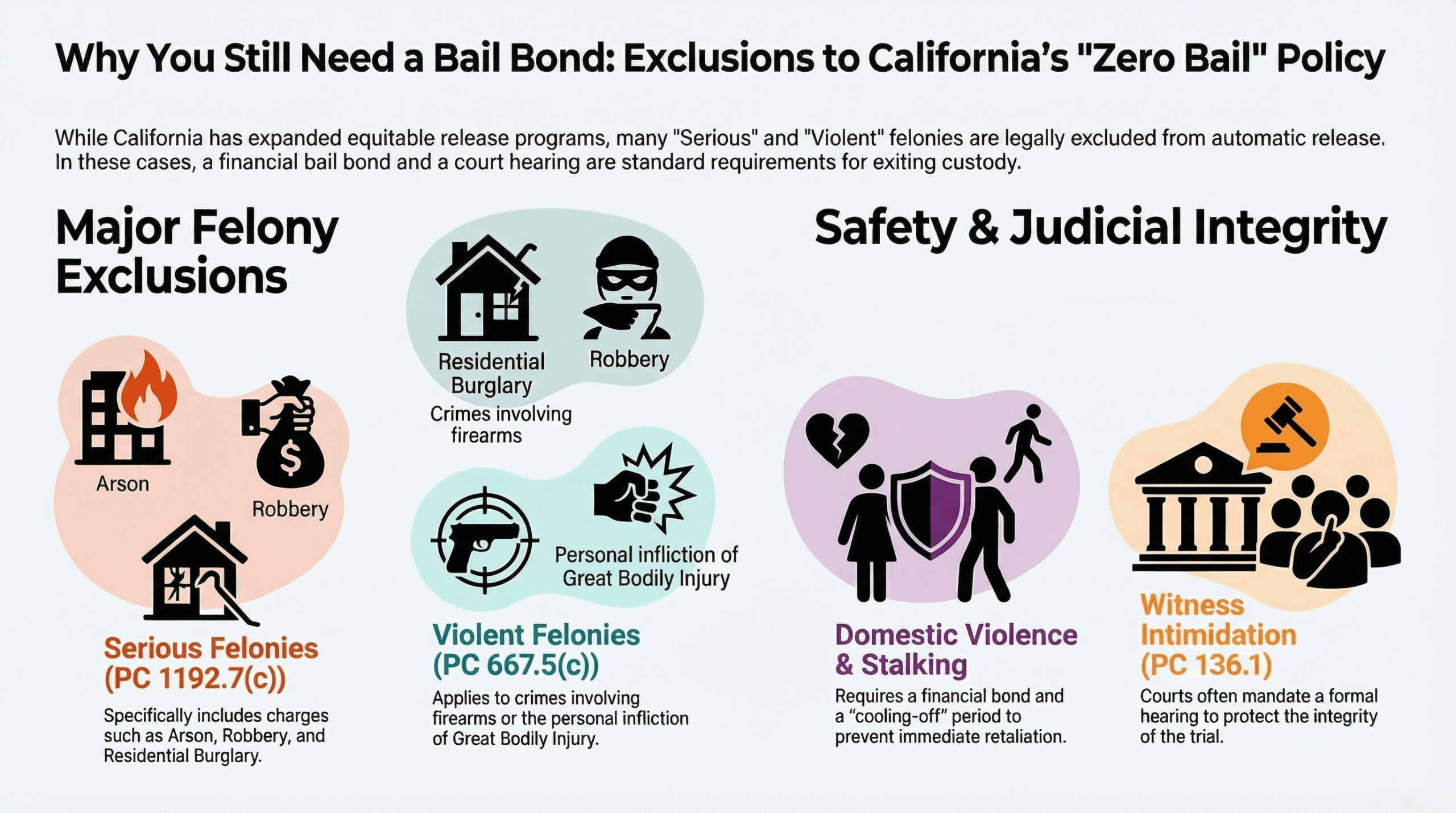
Serious Felonies (PC 1192.7(c)): This includes Arson, Robbery, and Residential Burglary.
Violent Felonies (PC 667.5(c)): Any crime involving a firearm or the personal infliction of Great Bodily Injury (GBI).
Domestic Violence & Stalking: Because of the high risk of immediate retaliation, Penal Code 273.5 (Corporal Injury on a Spouse) and PC 646.9 (Stalking) almost always require a financial bond and a cooling-off period.
Witness Intimidation (PC 136.1): If there is any evidence that you tried to prevent a witness from testifying, the court will likely hold you for a formal hearing to ensure the integrity of the trial.
Non-Criminal Reasons a Judge May Deny Your Bail
Sometimes, it isn’t just the crime itself that leads to a “no bail” order; it is the defendant’s history or behavior.
You Are Considered a Significant Flight Risk
If the judge believes you will run away rather than show up for court, they may deny bail. Factors include:
Having no ties to the community (no job, no family nearby).
Owning property or having citizenship in another country.
A history of “Failure to Appear” (FTA) or jumping bail in the past.
You Were Already on Probation or Parole
This is one of the most common reasons people stay in jail. If you are arrested while on probation or parole, the agency can put a “hold” on you. Even if the new charge is minor, the “Probation Hold” means you cannot be released until a revocation hearing is held.
Public Safety & Witness Tampering Concerns
The court’s primary job is to keep the public safe. If the prosecution presents “Clear and Convincing Evidence” that you have threatened witnesses or that your release puts a specific person in danger, the judge will lean toward a no-bail decision.
The Role of the Bail Hearing (Humphrey Hearings)
A major shift occurred in California law recently due to the case In re Humphrey. The California Supreme Court ruled that it is unconstitutional to keep someone in jail solely because they cannot afford to pay bail.
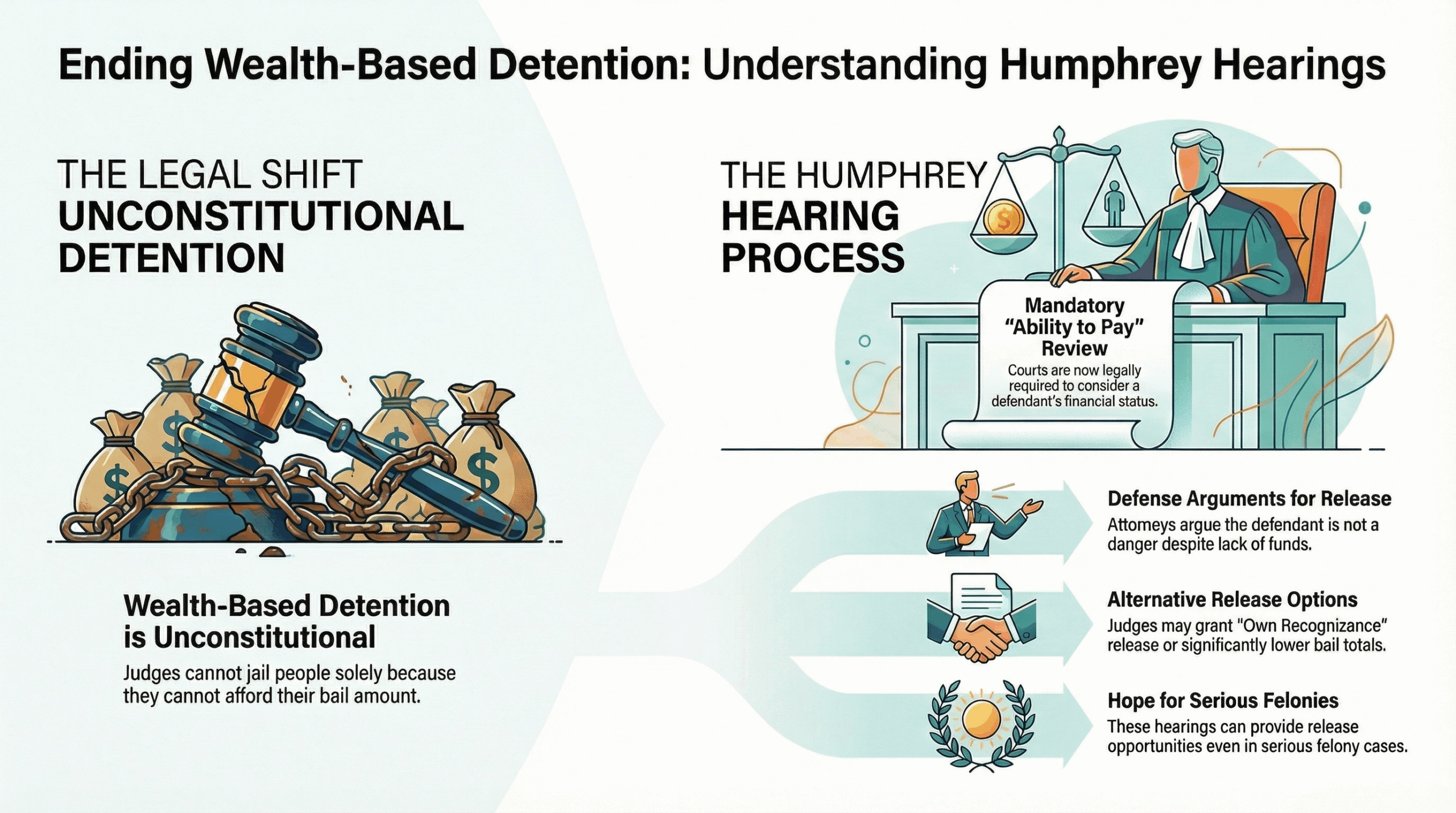
Now, judges must consider a defendant’s ability to pay. During a “Humphrey Hearing,” your attorney can argue that while you cannot afford a $50,000 bail, you are not a danger to society and should be released on your “Own Recognizance” (OR) or with a lower bail amount. This provides a glimmer of hope even in serious felony cases.
Enhancements That Can Trigger a No-Bail Hold
Enhancements are extra “add-ons” to a criminal charge that make the penalties—and the bail—much higher.
The “Three Strikes” Rule: If you have two or more prior “strikes” (serious or violent felonies) on your record, a new felony charge could trigger a no-bail hold because you are facing a potential life sentence.
Gang Enhancements (PC 186.22): If the prosecution alleges the crime was committed for the benefit of a criminal street gang, the judge often views the defendant as a significantly higher risk to the community, making a no-bail order more likely.
What to Do if You or a Loved One is Held Without Bail
If the jailer tells you “there is no bail,” don’t panic. This is often a temporary status until you see a judge.
The Arraignment: This is your first court appearance. Your lawyer will officially ask the judge to set a bail amount.
Bail Motion: If the judge denies bail at the arraignment, your attorney can file a formal “Motion to Set Bail.” They will present evidence of your “good character,” such as letters from employers or family.
Contact Armstrong Bail Bonds: Even if the bail is set very high, we can work with you on payment plans and collateral to ensure you can afford the premium.
California Bail FAQ
Can a judge deny bail for a misdemeanor?
Rarely. Under the California Constitution, bail denial is typically reserved for felonies involving violence, sexual assault, or capital offenses. However, if you have a probation hold or a warrant from another county, you may be held.
How long can they hold me without a bail hearing in California?
Generally, you must be brought before a judge within 48 hours of your arrest (excluding weekends and holidays). At this “Arraignment,” the judge will decide your bail status.
Does California still have a “Bail Schedule”?
Yes. Each county has a “Bail Schedule” that lists a standard dollar amount for every crime. However, judges have the final say and can go higher or lower than the schedule based on the facts of the case.
What is the “Facts are evident or the presumption great” rule?
This is the legal standard a judge uses to deny bail in capital cases. It means the evidence against the defendant is so strong that it’s highly likely they will be convicted.
Can a “No Bail” status be changed?
Yes. As new evidence comes to light or if your lawyer can prove that GPS monitoring or house arrest is enough to keep the public safe, a judge can revise a “No Bail” order to a financial bail.
Contact Armstrong Bail Bonds Today
Dealing with a “No Bail” situation is overwhelming, but you don’t have to face it alone. Whether you are dealing with a serious felony that requires a high bond or you need guidance on how to handle an ineligible “Zero Bail” charge, Armstrong Bail Bonds is here to help.
We provide fast, professional, and empathetic service to families throughout California. We understand the local court systems and will work tirelessly to get your loved one home as quickly as the law allows.
Don’t wait behind bars. Contact Armstrong Bail Bonds today for a free consultation and let us help you secure your freedom.