

10 Dec How Long Can You Go to Jail in Domestic Violence?
Domestic violence leaves deep scars on victims and affects society. It also leads to serious legal consequences, like jail time. In the United States, jail time for domestic violence varies a lot. It depends on the severity of the crime and the details of each case.
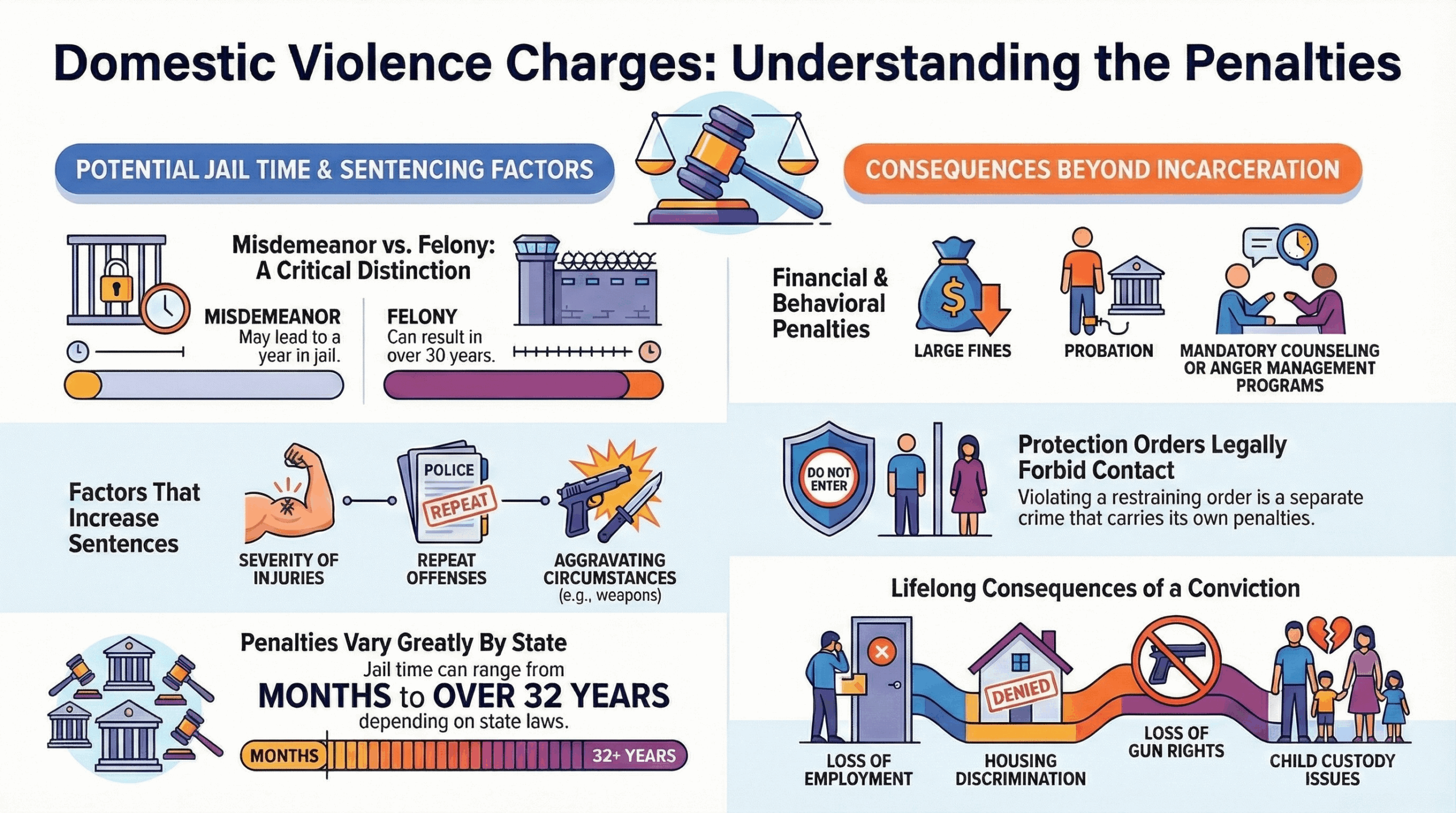
Minor assaults, like threats, can get you 60 days in jail. But, domestic battery, a more serious crime, can mean a year in jail. This shows how different jail times can be for different crimes.
Felony charges for domestic abuse are even more serious. People found guilty can face up to 30 years in prison. The exact time depends on the victim’s injuries, the defendant’s past crimes, and the situation of the incident.
Looking at Colorado’s laws, penalties can range from months to 32 years. This shows Colorado’s strong stance against domestic abuse and its effects.
Understanding Domestic Violence Charges
Domestic violence charges are very serious because they hurt victims and the community. They include domestic battery and domestic assault. Knowing the difference between misdemeanor and felony charges is key. This affects both domestic violence penalties and criminal charges.
Definition and Categories of Domestic Violence
Domestic violence is when someone in a domestic setting, like marriage, gets hurt or threatened. It can be physical, like hitting, or emotional, like yelling. The law looks at the intent and how bad the act was when deciding on charges.
Misdemeanor vs. Felony Charges in Domestic Violence
Domestic violence charges can be misdemeanors or felonies. This depends on the situation, how badly the victim was hurt, and the defendant’s past. Misdemeanor domestic battery might mean up to a year in jail or a fine.
Felony charges are for more serious cases. They can lead to longer prison times and bigger fines. Knowing the difference helps prepare for legal outcomes and domestic violence penalties.
Factors Influencing Domestic Violence Jail Time
Judges look at many things when deciding jail time for domestic violence. The severity of domestic violence charges, mandatory sentencing laws, repeat offenses, and the case’s details are key. These factors shape how justice is served in these serious crimes.
The severity of the offense and victim’s injuries greatly affect decisions. Severe injuries or emotional harm can mean longer jail time. This is true, even if the victim’s injuries are permanent or severe.
Having a history of repeat offenses in domestic violence also matters. Those with past crimes face tougher sentences under mandatory sentencing. These rules aim to stop repeat offenders and protect victims.
Aggravating circumstances like committing the act in front of kids or using deadly weapons can raise charges. These situations often lead to deeper looks at the crime’s intent and context. This can result in longer jail sentences.
Every detail, from mandatory sentencing to the specifics of the crime, is important. Knowing these factors helps everyone understand why certain sentences are given. This includes the defense, prosecution, and the community.
State Specific Sentencing Guidelines
In the world of state domestic violence laws, sentencing guidelines differ a lot across the United States. These rules depend on the crime’s severity and the situation, affecting both misdemeanor domestic violence jail time and felony domestic violence jail time. Let’s look at how these sentences are decided:
- Misdemeanors can lead to jail time from a few days to a year, based on the state’s rules and any extra factors.
- Felony penalties are much tougher, possibly up to 20 years or more in prison, in strict states like Texas.
The difference between misdemeanor domestic violence jail time and felony domestic violence jail time depends on several things. These include past crimes, weapon use, and the harm done. Each state looks at these details to make their legal responses fit each case.
To get a better grasp of how states handle these sentences, check out detailed info on felony and misdemeanor sentencing. This shows how judges use their judgment to match the punishment with each case’s unique aspects. It ensures fairness across different places.
Legal Penalties Beyond Jail Time
When dealing with domestic violence, the law goes beyond jail time. Financial penalties are used to deter and help victims. Looking into the legal consequences of domestic violence shows a strong system. It aims to stop future crimes and help offenders change.
Fines and Financial Penalties
Domestic violence penalties can hurt a person’s wallet a lot. Fines vary based on the crime’s severity. There are also costs for legal fees and damages to victims. These add up to a big financial burden.
Probation and Mandatory Counseling
Probation is a key part of domestic violence penalties. It can replace jail time. Probation includes mandatory counseling to change behavior and help reintegrate into society. Counseling helps with anger, substance abuse, and more, aiming to reduce future risks.
- Restraining orders and limited contact provisions ensure immediate safety post-allegation.
- Compliance with set curfews and periodic check-ins enforce disciplined living routines.
- Employment stipulations focus on maintaining or seeking job opportunities which contribute to societal and self-rehabilitation.
The path for those convicted of domestic violence is clear. It balances punishment and chance for change. This approach helps offenders reintegrate into society.
The Role of Protection Orders in Domestic Violence Cases
In the fight against domestic violence, protection orders and domestic violence restraining orders play a key role. They act as shields for victims, keeping them safe from harm. These orders are important because they limit the accused’s contact with the victim.
https://www.youtube.com/watch?v=udC162ckoMU
A domestic violence restraining order is given by a court. It legally stops the accused from contacting the victim. This includes not just being close, but also no phone calls, emails, or messages through others. The goal is to protect the victim right away and keep them safe.
Breaking these protection orders is serious. It can lead to big legal consequences for offenders. This might include more charges, jail time, fines, and a bad reputation in court. The idea is to show that ignoring these orders is not okay.
Also, domestic violence laws that cover these orders are strict. They make sure victims are protected well by the law. Everyone must follow these laws to keep victims safe and to keep the legal process fair.
How Prior Convictions Impact Sentencing
Having a history of domestic violence charges can make things worse. The legal system looks closely at past crimes to decide on harsher penalties. This is true for those who have been in trouble before.
When it comes to sentencing, domestic violence repeat offenses are a big deal. They show a pattern of behavior. This leads to increased penalties to protect victims and help the offender change.
Prior convictions’ impact on sentencing goes beyond just longer jail times. They can also mean stricter bail conditions. This could be higher bail, more monitoring, or even no bail at all in some cases. The goal is to keep people safe before they go to trial.
- Longer jail times based on past crimes.
- Forced counseling or programs to fix underlying issues.
- Strict bail conditions like house arrest or GPS tracking.
These steps show the legal system’s focus on punishment and victim protection. By hitting repeat offenders hard, the system tries to stop more violence. It also works to keep communities safer.
Defending Against Domestic Violence Charges
Being accused of domestic violence is a serious matter. A strong legal defense can greatly impact your case’s outcome. Key strategies include proving false allegations wrong, showing self-defense, and pointing out inconsistencies in the accuser’s story. Knowing these defenses helps those wrongly accused to better understand the legal system.
- Evidence Contradiction: A key part of domestic violence legal defense is checking the prosecution’s evidence for mistakes. Lawyers look closely at witness statements and physical evidence for any issues.
- Alibi: A solid alibi that shows the accused was somewhere else at the time of the incident is a strong defense.
False Accusations and Self-Defense Claims
- Unveiling Motives behind False Allegations: If false domestic violence accusations are suspected, showing why the accuser lied is a strong defense. Reasons can include custody battles or personal grudges, which can weaken the accuser’s claims.
- Justifying Self-Defense: If the defendant acted to protect themselves from harm, explaining this self-defense is key. Lawyers focus on proving the action was necessary and immediate.
Defending against domestic violence charges needs a deep understanding of legal defenses. Lawyers with experience in this area are essential. They work hard to ensure justice and protect individuals’ rights.
Consequences of a Domestic Violence Conviction
A domestic violence conviction has wide-reaching effects. It impacts your legal status and personal and professional life. It’s vital to understand these effects if you’re facing charges or dealing with a conviction’s aftermath.
The impact on employment can be severe. Many employers check backgrounds. A domestic violence conviction can lead to job loss or prevent certain jobs, like in schools, healthcare, and government.
Housing discrimination is another challenge. Landlords often don’t rent to people with criminal records. This makes finding a place to live hard, affecting your stability.
Also, gun ownership restrictions apply. Federal law bans owning guns for those convicted of domestic violence crimes. This limits your right to bear arms.
The custody implications can change family dynamics. Courts might see a parent with a conviction as a risk. This could mean limited or supervised visitation, affecting the parent-child relationship.
These consequences can make recovery and rehabilitation hard. It shows why legal help and support are key for those accused or convicted of domestic violence.
California Specific Domestic Violence Laws and Sentences
In California, laws against domestic violence are strict to protect victims and punish offenders. It’s important to know about California domestic violence sentencing if you’re involved. The state has different rules for misdemeanor and felony charges, which change the jail time.
In Los Angeles County, the penalties for domestic violence can vary. This is because local laws and precedents play a big role. LA county’s penalties aim to stop future violence and keep the community safe.
Misdemeanor domestic violence can lead to up to a year in jail. But, sentences often include probation and a batterer’s program. Felony domestic violence, with serious injuries, can mean years in state prison.
For details on bail and pre-trial conditions in Los Angeles, check out this California Heights bail bonds guide.
If you’re accused or a victim of domestic violence, getting good legal advice is key. It helps you understand and prepare for the legal outcomes of these serious charges.
Support and Resources for Domestic Violence Defendants
For those facing domestic violence charges, knowing about support and resources is key. Working with a defense attorney and using domestic violence educational resources is vital. These steps help during a tough time.
Having a defense attorney experienced in domestic violence cases can greatly help. They do more than defend you; they offer a strong support system. They help understand and fight against the accusations, aiming to lessen the impact.
Domestic violence educational resources are also important. Programs that teach about and help solve domestic violence issues are key. They help in personal growth and show a positive effort, which can help during sentencing.
- Consultation and representation by experienced defense attorneys
- Enrollment in accredited educational programs on domestic violence
- Guidance on navigating the complexities of the legal system
- Assistance in accessing community support services
In summary, getting domestic violence support from a dedicated lawyer and using educational programs is a strong strategy. It helps address domestic violence charges effectively.
Conclusion
In this article, we explored the legal ramifications of domestic violence. We looked at how a domestic violence jail sentence is determined and the penalties that follow. The effects of domestic abuse are far-reaching, impacting personal futures, family relationships, and social standing.
Understanding the laws surrounding these cases is key. This knowledge helps manage the outcomes effectively.
For those accused, getting help from a skilled attorney is essential. They can protect your rights and try to lessen the penalties. The help of a knowledgeable defense attorney is vital in complex domestic violence cases.
Victims also need to know their rights. This includes understanding restraining orders and support systems available to them.
In our final thoughts on domestic violence incarceration, each case is unique. This uniqueness affects the legal process and its outcomes. As society emphasizes the seriousness of domestic violence, understanding these legal aspects becomes more important.
Whether you’re a defendant or a victim, knowing the consequences of domestic abuse is vital. It helps you navigate the path to justice and recovery.